
Lovevery’s Co-Founder Jessica Rolph on Rethinking Early Childhood Through Play.
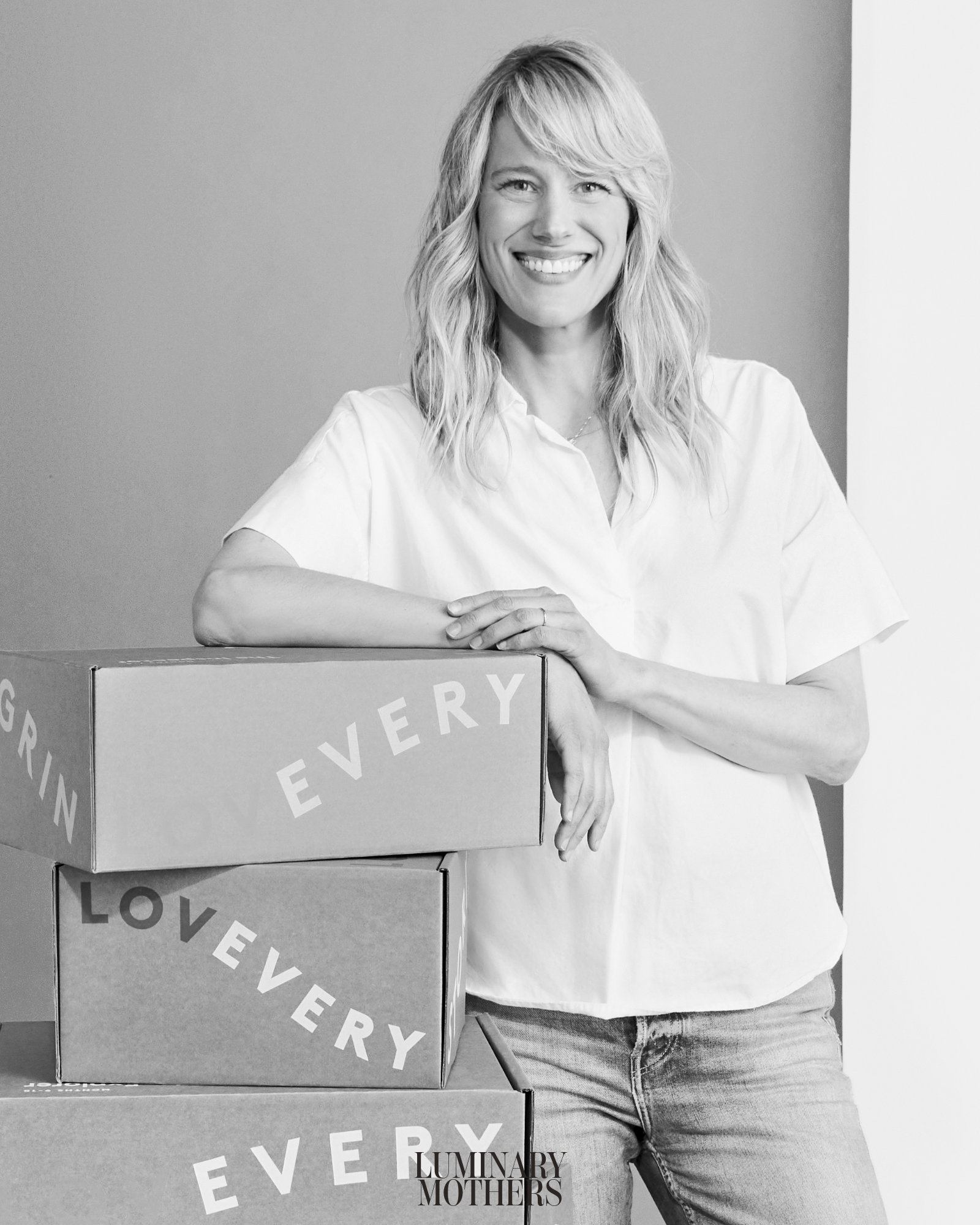
Image Courtesy of Lovevery
Some founders build a single successful company in their lifetime. Jessica Rolph has built two, both rooted in a deep curiosity about how the earliest years of life shape who we become.
Before co-founding Lovevery, the research-backed play company now trusted by millions of parents around the world, Rolph helped build Happy Family Organics into one of the leading organic baby food brands in the United States. If her first company reshaped how many parents think about nourishing a child’s body, her second began with a quieter but equally consequential question: what nourishes a child’s brain?
It’s a pattern that surfaces often when speaking with entrepreneurial mothers. Motherhood has a way of sharpening attention. Everyday moments, the toy on the floor, the food on the plate, the questions children ask as they grow, suddenly carry new weight. What once felt ordinary becomes a site of curiosity, and sometimes, the beginning of a new idea.
For Rolph, that moment arrived on the floor of her living room, watching her baby play with what she remembers as a purple plastic toy covered in buttons and flashing lights. After years spent building Happy Family, she felt confident about how she was nourishing her child’s body. But she realised she had far less clarity about what was nourishing his developing brain.
The search for that answer eventually led to the creation of Lovevery, a company built on a simple but powerful idea: that play, when thoughtfully designed and paired with guidance for parents, can become one of the most important tools in early childhood development.
Yet Rolph’s perspective on childhood is inseparable from her experience as a mother of three. In our conversation, she reflects on how motherhood has reshaped her understanding of achievement, leadership, and time itself. As she puts it, parenting evolves from “managing their world to guiding them through it.”
In this week’s Conversation With, Rolph shares the lessons behind building two mission-driven companies while raising a family, the resilience required to create something meaningful, and why she believes the work of raising children offers its own powerful model of leadership. As she tells the Luminary Mothers community, “Parenting is leadership in its purest form.”
By Alice Codford
ON MOTHERHOOD
Alice: You’re a mum of three and a founder, do you feel motherhood has changed you? In what ways, personally and professionally?
Jessica Rolph: Motherhood is the most profound change I’ve gone through in my life. Author Elizabeth Stone said that motherhood “is to decide forever to have your heart go walking around outside your body.”
On a practical work level, becoming a mother meant changing how much time I could spend on work and creating order in my life. Before I had children, I spent my weekends cleaning my house and clearing my email inbox. That just wasn’t realistic anymore once I had a baby.
What’s a motherhood belief you used to have that you’ve totally softened on over time?
Jessica Rolph: I’ve softened on achievement. As my children have gotten older, I’ve begun to understand that I need to move back and forth between what’s going to make a difference in the short term, versus what makes a difference in the long term.
For example, I can’t always take the sugary snack that everyone gets after a soccer game out of my children’s hands, but I can commit to nutrition at home. I can’t force my child to read the novel I recommend, or continue with piano lessons, but I can offer consistent alternatives to screens.
“Motherhood is to decide forever to have your heart go walking around outside your body.”
What’s been the most unexpected part of motherhood for you, either emotionally or practically?
Jessica Rolph: One of the most unexpected parts of motherhood has been realizing that it doesn’t get less difficult as your children grow, it just changes shape.
With babies, the responsibility feels so physical: you’re doing everything for them. As my children grew older, their needs became more complex. You’re watching them form identities, navigate friendships, and take risks. You’re constantly recalibrating. When to step in, when to step back, when to hold firm, and when to listen.
Motherhood evolves from managing their world to guiding them through it.
On a tough day of juggling leadership + parenting + life, what helps you reset after the chaos?
Jessica Rolph: If I’m truly maxed out, water is the answer. Quiet, a warm bath, no music, low lights.
What has motherhood taught you about boundaries, especially the kind that protect your energy, your patience, and your creativity?
Jessica Rolph: Motherhood forced me to get serious about saying no. I read that exceptionally successful people are really good at protecting their time and energy, and that resonated with me. I need a lot of creative, optimistic energy to do my job, and that requires time.
What do you wish you’d known before becoming a mother?
Jessica Rolph: That I would be raising myself all over again as I’m raising my children. The older my children get, the more true this becomes. I’m learning as much from them now as they learn from me.
ON LOVEVERY: HOW IT STARTED & WHY IT WORKED
Take us back to the real beginning. What was the moment you thought: “There has to be a better way to support babies’ development through play”?
Jessica Rolph: One day I was sitting on the floor watching my baby play with a purple plastic cow that had half-a-dozen buttons on it and all these flashing lights. I remember thinking: What is this actually doing for his brain?
The first company I cofounded, Happy Family, is the leading brand of organic baby and toddler food in the U.S. I learned so much about the importance of nutrition as I built Happy Family, and I felt confident about what I was feeding my baby’s body. But I wasn’t sure what I needed to do to nourish his brain.
I went searching for answers and discovered a doctoral thesis on infant brain development. It offered detailed, nerdy ideas for toys I could make and activities we could do together. I never looked at toys the same way again.
When you first had the idea, what did you do next? What was your very first “test”?
Jessica Rolph: I remember discovering Montessori infant classroom materials. They were only available through school catalogs, so I started making things at home. I spent years reading, researching and testing out homemade prototypes with my own children, figuring out what needed to happen to bring it all to life.
When you’re building products for children, the stakes feel emotional. How do you balance being evidence-led without adding pressure or perfectionism to parents?
Jessica Rolph: This is something we think about constantly. We take decades of research on early brain development and package it into simple, powerful playthings paired with guidance for parents. Because we’ve done all the work, parents can just do the most important part: show up and play.
What’s a customer message or story that made you think, “Okay… this is bigger than a product”?
Jessica Rolph: Parents are constantly DMing me! When a parent tells me that a Lovevery book helped their child prepare for a doctor’s visit or that their child’s teacher praised their reading ability, that’s when what we’re building feels bigger than a product.
We had a mother reach out to us, asking if we would consider creating a book that represented her daughter, who has a limb difference. That request turned into a book that now helps children see themselves or understand others in a more inclusive way.
We lead with heart and optimism, and it’s amazing when we see our products impact families in real, meaningful ways.
ON YOUR FIRST SUCCESSFUL BUSINESS: HAPPY FAMILY & WHAT IT TAUGHT YOU
Before Lovevery, you helped build a major baby food brand. What did that first business teach you that you carried directly into Lovevery?
Jessica Rolph: At Happy Family, I learned a lot that would serve me later when getting Lovevery off the ground. Persistence was key. When we were designing our first product for Lovevery, The Play Gym, we had so many early prototypes and conducted hundreds of hours of testing with real families. We were determined to get it right before launching. That discipline came directly from my first company.
A lot of founders talk about “timing”. Looking back, what timing factors helped your first business break through?
Jessica Rolph: We launched Happy Family when awareness around organic food was just starting to accelerate. Parents were beginning to question ingredients and demand better transparency, but the baby aisle was still dominated by legacy brands. Only about 3% of baby food was organic at the time.
We were early enough to help define the category, but late enough that consumer awareness was building and there was a growing appetite for mission-driven brands. Timing helped open the door, but our intentional strategy allowed us to create growth opportunities.
“Parenting is leadership in its purest form.”
Selling or exiting a business can be emotionally complex. What surprised you most about that chapter, personally, not just financially?
Jessica Rolph: I was surprised how personal it felt. When you build something from the ground up, it becomes part of your identity. There’s pride and gratitude, but also a real sense of transition when it’s time to let go. That experience helped me understand that I love the process of building a business and making an impact. So when the idea for Lovevery began to take shape, I felt ready to start again.
If you could go back and give “first-time founder Jessica” one piece of advice from the Happy Family era, what would it be?
Jessica Rolph: Don’t confuse struggle with failure.
There were times when things felt messy with product pivots, retailer rejections, or fundraising stress. Oftentimes I interpreted those moments as a sign that we were off track. What I know now is that tension and uncertainty are part of building something meaningful. Progress rarely feels smooth while you are in it. I would tell myself to trust the resilience I was building, because that resilience became one of my greatest strengths later on.
ON ENTREPRENEURSHIP & LEADERSHIP (THE REAL STUFF)
What do you think people misunderstand about you as a founder, especially because your brands feel so calm, warm, and polished?
Jessica Rolph: I’m deeply detail-oriented, perhaps too much so! I obsess over product decisions, messaging, and whether we’re doing all we can to be of service to families. The calm tone of Lovevery is intentional. Parents can be overwhelmed and they don’t need more noise. But behind that simplicity is a team that tests, iterates, and pushes hard to get it right.
Do you ever experience mum guilt as a CEO? And if so, what do you tell yourself in those moments?
Jessica Rolph: Of course! I still replay moments in my head and wonder if I could have shown up differently at work or at home. What helps is reminding myself that my children are not looking for perfection. They’re watching how I handle responsibility, setbacks, and purpose, and that modelling matters.
Do you find it hard to switch off at the end of the day? What’s actually helped, not in theory, in real life?
Jessica Rolph: I think for any parent, switching off can be challenging. What works for me is making a physical
shift. That could be putting my phone away during dinner, going on a walk, or sitting down to 5 really listen to my kids tell me about their day. Full presence shifts my nervous system more than anything else.
“Don’t confuse struggle with failure.”
What are your non-negotiables that keep you grounded and protect you from burnout?
Jessica Rolph: Time with my family when I’m truly present. Protecting my calendar from unnecessary commitments.
Letting go of small things that don’t move the needle. Also, I’ve made peace with an imperfect house. That one was big.
ON WOMEN JUGGLING MOTHERHOOD & AMBITION
What would you say to a woman who feels like she’s “behind”, behind in business, behind as a mum, behind in her own life?
Jessica Rolph: Try not to measure your life against someone else’s timeline. It’s so easy to assume others have it more figured out. Growth isn’t linear and no choice is permanent. Start believing that where you are now, even if that’s confusion, is where you belong. You’re building expertise and resilience in whatever your current chapter–whether that’s at home, at work, or both.
What does “having it all” mean to you now, and what do you think that phrase gets wrong?
Jessica Rolph: It means doing work that matters and being present for myself, and the people I love. The phrase “having it all” implies perfection, but real life has to be more flexible.

Image Courtesy of Lovevery
LOOKING AHEAD
What’s next for Lovevery? What are you most excited to build or deepen in the next year?
Jessica Rolph: I’m especially excited about the launch of our Play Kits for 4-Year-Olds in the UK. This year of play is all about building essential life skills like flexible thinking, critical thinking, frustration tolerance, and planning ahead. Parents of 4-year-olds want their child to be resilient and capable and well-rounded, and this year of Play Kits delivers.
As for what’s next, our ultimate vision is to support every part of the parenting experience throughout early childhood.
What legacy do you hope Lovevery leaves, not just as a brand, but as a cultural shift inhow we treat early childhood and parents?
Jessica Rolph: I hope Lovevery reinforces the idea that the first five years of a child’s development truly matter, not in a fear-based way, but in a reverent way. When we treat early childhood with care and intention, we’re investing in emotional resilience, curiosity, and lifelong learning. And when we treat parents with empathy and support instead of judgment, we strengthen families.
And finally, what message would you like to leave with the Luminary Mothers community?
Jessica Rolph: Mothers, you are so valuable. I hope you feel pride in the countless small decisions made with love, and the way you share yourself with your children. Parenting is leadership in its purest form. What you’re building matters more than you know. And I’m cheering for you.
Follow Jessica on Instagram here. Follow Lovevery Here. Visit Their Website Here.