
Mother Euro: Building a Deeply Connected Community for Mothers Moving to Europe.
In our first joint Conversation With, the founders unpack the myth vs. reality of motherhood abroad — and why community matters as much as the logistics.

Image Courtesy of Mother Euro
There’s a growing number of mothers asking a question that would have felt radical a decade ago: What if the way we’re living isn’t the only way? As the cost of childcare rises, burnout becomes baseline, and safety and quality of life feel increasingly urgent, more families are looking across the Atlantic not for an “escape,” but for a different rhythm of everyday life.
For the first time in our Conversation With series at Luminary Mothers, we’re doing a joint interview — because this story is best told in tandem. Emily San José and Maggie Gavilán are the founders of Mother Euro, a community supporting English-speaking mothers who are relocating to Europe or already building lives there. Based in Madrid, with events held all around Spain, they’ve created something that speaks to both the practical and the emotional realities of a move: the paperwork and planning, yes — but also the loneliness, the identity shift, and the very human need to feel held while everything changes.
Mother Euro sits at the intersection of logistics and belonging: a place for visa and school questions alongside late-night voice notes, real-time reassurance, and friendships that turn a new country into something that can feel like home. In our conversation, Emily and Maggie unpack what’s driving this current wave of mothers considering Europe, how the pandemic and social media have shaped the narrative, what people misunderstand about relocating with kids, and why community is often the difference between “we tried” and “we stayed.” Their perspective is both aspirational and honest — a reminder that choosing a different life doesn’t mean choosing an easy one, but it can mean choosing one with more presence, support, and joy.
By Alice Codford
WHY EUROPE, AND WHY NOW
Alice: We’re seeing more American families, especially mothers, considering a move to Europe. Why do you think this moment is happening now?
Maggie: I think a lot of American families, especially moms, are starting to look at moving to Europe because they’re really craving something different for themselves and their families. There’s a growing awareness of the benefits, things like better safety, more flexibility, and a wider range of opportunities. This moment feels right as people are beginning to recognise all that Europe has to offer, and they're excited about the possibilities.
Emily: I think this moment is happening because a lot of families, and mothers in particular, are waking up to the feeling that the way they have been living is not sustainable. In the U.S., the grind of daily life is so heavy. Between the cost of childcare, the pressure to work long hours, and the constant rushing, you end up with very little space for yourself or your family. I remember that feeling so well, like I was constantly treading water just to keep us afloat. Europe represents the idea that it could be different. Maybe you could walk to pick up your kids instead of sitting in traffic. That you could spend your weekends outside together instead of recovering from burnout. That you could feel safer sending your kids out to play. It does not mean that moving abroad suddenly makes everything perfect. It doesn’t. But I think mothers especially are realising they want more presence, more balance, and more joy in their everyday lives, and Europe feels like a place where that is at least possible.
What do you think drives the allure of Europe most for American mothers: politics, lifestyle, culture, or something more emotional?
Maggie: I think because of all of the above.
Emily: For me, it is definitely emotional. There are political and cultural reasons, of course, but the thing that keeps me here and keeps me excited is how it feels. There are moments when I am walking my kids through Madrid and it just hits me, “this is my life, I actually live here.” I still get chills about that, years later.
When I first moved, my kids were four months and three and a half years old. I was exhausted, I was homesick, I was trying to adjust, and it was hard. But then there would be these moments — sitting in a plaza with a coffee while my kids played, or being welcomed into a community celebration — and I would feel this deep sense of belonging.
Those small everyday experiences are what mothers crave. They want to feel like their family fits into the flow of life, instead of always being an afterthought. That is the emotional draw, and it is powerful.

Image Courtesy of Mother Euro
From your perspective, what are the biggest differences in how Europe and the U.S. support mothers and families?
Maggie: From my perspective the biggest differences between how Europe and the U.S. support mothers and families include parental leave policies, where many European countries offer extensive paid leave while the U.S. still lacks a federal mandate; childcare support, with Europe providing more affordable and accessible options compared to the high costs in the U.S., work-life balance, as European cultures often promote shorter workweeks and mandatory vacation time, healthcare access, with many Europeans benefiting from universal healthcare that covers maternal and pediatric care, unlike the often costly and variable healthcare in the U.S., and cultural attitudes, where European societies tend to prioritize family life more, whereas U.S. parents may face greater pressure to balance work and family.
These factors collectively shape the experiences of mothers and families in both regions, influencing their well-being and choices.
Emily: The first thing that stood out to me is how normalised children are here. Kids are part of life in Spain. You see them everywhere, at restaurants late at night, in parks, in cafes. They are not treated as a disruption or something that needs to be hidden away. As a mother, that shift alone is huge. It makes you feel like you and your children belong in public life, instead of feeling like you are in the way.
Another big difference is the baseline of support. In the U.S., I felt like everything fell on me to figure out — from healthcare to childcare to work schedules. Here, even though there are still plenty of frustrations (believe me, the bureaucracy can break you), there is this cultural understanding that family life matters. Paid leave, vacation time, universal healthcare, affordable childcare. Again, not perfect, but the very fact that those systems exist gives mothers more breathing room.
When I moved here, I realized how much of my motherhood in the U.S. was about surviving. Here, it feels a little more like living. And that doesn’t mean it is easy. It is still a daily struggle in many ways, especially without my family nearby. But it feels like the culture itself is not working against me, and that has changed everything.
Do you think the pandemic accelerated this shift toward families wanting a different rhythm of life? Or has social media influenced it through expat family accounts?
Maggie: I do believe the pandemic significantly accelerated a shift in priorities for many families, leading them to reconsider what they truly value in life. Suddenly, achieving a better work life balance and cherishing quality family time became paramount. People were realising (myself included) they were truly burnt out. I also believe social media has played a notable role in this transformation, particularly through expat family accounts. These platforms often portray idyllic lifestyles in Europe, showcasing beautiful moments that can create a tempting allure for those considering a move.
However, I have some concerns about this. Many of these accounts focus on the luxuries and romanticised aspects of living abroad, which can present a misleading narrative. The truth is that relocating to a new country (navigating a different language and culture) comes with its own set of challenges that are often overlooked amid the picturesque highlight reels.
I find myself particularly frustrated with influencers who have recently moved abroad and position themselves as "experts" in the expat/living abroad experience. As someone with a deep connection to Spain - I am half Spanish, a dual citizen, raised by a Spanish father in America, and have visited Spain regularly throughout my life for the past 33 years as my entire paternal side is here - I have lived this journey...this is quite literally a huge part of my identity. It’s disheartening to see individuals who have been in a new country for only a few months or even a year attempting to educate others about their experiences and the cultural nuances of said country, which can lead to misconceptions.
For example, the prevalence of misinformation about cultural differences between American and Spanish people is troubling. It’s essential to approach social media content critically and do thorough research, as not everything presented is accurate or representative of reality. For instance, when it comes to navigating legal matters or understanding tax regulations, it’s crucial to consult with qualified professionals who are genuinely knowledgeable about these systems, experts who are actively engaged in their fields rather than relying on generalizations found online or these influencers who are charging 80-100 euros for consultations...I can't tell you the amount of times we’ve had chemistry calls with potential members and current members of Mother Euro and some got sucked into the vortex of these “influencers” charging them and ultimately guiding them in the wrong direction, therefore losing their money and time. It actually upsets me.
I feel the space is getting extremely crowded and the phenomenon of expat influencers commodifying their experiences can feel opportunistic, as though they are leveraging their new lives for social media gain. While there is much to be shared and learned online, I believe it’s vital to strike a balance between showcasing the joys of living abroad and acknowledging the hurdles that accompany such a transition. Authenticity and honesty about both the triumphs and challenges of this journey should be at the forefront of these discussions. Deeming yourself an “expert” needs to have some sort of backing other than “I’m living it or I did it, so can you.”
Emily: I think the pandemic opened people’s eyes in a way that nothing else could have. Suddenly, all of the things we accepted as “normal” — long commutes, packed schedules, barely seeing our kids — got stripped away. Families got this taste of being together more, of working differently, of slowing down, and it made a lot of us ask, “why were we living like that in the first place?” For me, it made me rethink what mattered, and I think many others felt the same.
Social media has definitely added fuel to that fire. Seeing other families abroad can plant the seed that it is possible. But I also think it can be misleading. You see the highlight reels — the dreamy villas, the kids running through cobblestone streets — but not the struggles.
What I try to show in my own content is both sides. Yes, there are magical days, but there are also days where I am crying in the grocery store because I cannot explain what I need in Spanish, or I feel lonely and disconnected. It is both. That honesty matters, because people need to know that choosing a different life does not mean choosing an easy life.
“I think we are part of a bigger moment where mothers are giving themselves permission to want more.” - Emily
Are there common misconceptions about what life in Europe is really like for parents that you’d like to clear up?
Maggie: There are many, but one is that life in Europe will suddenly become easier for parents. In reality, it often gets more challenging (at least at first). Moving to a new country involves adjusting to different cultures, navigating unfamiliar systems, and sometimes facing language barriers. Parents may find themselves needing to adapt to new educational frameworks and support networks, which can be overwhelming.
While there are many wonderful aspects to life in Europe, it’s important to be prepared for the initial difficulties that come with such a significant transition. Example; four months ago I gave birth in Spain. My first child was born in the states. I had to navigate a completely different healthcare system and let me tell you…it's not for the weak. I personally felt like I had to advocate more for myself here in terms of my birth plan than I did in the United States.
Emily: A common misconception is that once you move, life will just fall into place. The reality is that it often gets harder before it gets easier. When I moved, my children were still so little. I had already figured out what “mom life” looked like in the U.S., and then suddenly I had to start over. Different systems, different expectations, different rhythms. It was disorienting. Another misconception is that you will suddenly feel like you belong. For me, it has been the opposite.
There are days where I feel like I don’t fully fit in anywhere. Not in the U.S., not completely in Spain. That can be lonely, but it has also given me perspective and resilience I never expected. What has helped me is creating community, people to share those ups and downs with. That is what we are trying to build with Mother Euro, so that no one feels like they are doing this on their own.
Emily, Maggie, can you take us back to the beginning? How did you meet, and when did the idea for Mother Euro first take shape?
Maggie: I DM’d Emily on Instagram after seeing a reel she posted about her experience as an American mother living in Spain. At the time, I was pregnant with my first child, and my husband and I were considering the move to Spain to be closer to my family and culture. Although I am grateful to have family there, I realized I lacked a local support network and would miss the community of moms I had in the U.S., both in Florida and New York. Many of those women have been my rock. I contacted Emily in the hopes that we could grab a drink when I arrived in Spain and talk, ultimately seeking friendship. After we met, the rest is history. She has become one of my best friends and an incredible business partner. We consider each other family. As I transitioned from the States to Spain navigating the process of finding a place to live, arranging schooling for my daughter, and managing paperwork for my husband, I thought about how challenging this experience must be for others in similar situations. If I was going through this while also managing pregnancy and becoming a first time mother, surely other women would be too and could benefit from support. That was definitely the case! I found myself on the phone with women from morning until night, sharing experiences and advice. Emily and I discussed our journeys and realized that since we were both living through it, we could create a community to help other women and mothers ease into the transition of moving abroad.
Moving to a new country is challenging on its own, but doing so as a mother (especially a pregnant one) presents a unique set of challenges. There are OBGYNs to consider, specific birth plans women may want to pursue, and circumstances like IVF that come into play.
That’s why our community, Mother Euro, is more than just a relocation service, it’s a community and a platform for women (mothers) moving abroad with their families and/or already living in Europe who are seeking connection with other English speaking mothers. We aim to support them with a holistic approach, ensuring they feel seen and supported in this significant life transition.
“Success looks like women giving themselves permission to imagine something different and then actually making it happen.” - Maggie
Mother Euro was born from your own relocations and a desire for deeper connection to culture, community, and family. How did your personal experiences inspire the idea?
Maggie: As a Spanish-American, I have always envisioned raising my family in Spain. Marrying a Spaniard adds another layer of connection to Europe, and it’s often a shared sentiment among others in similar situations that, at some point, you find your way back to Europe, whether temporarily or permanently. This belief has shaped my personal journey and the experiences I sought for my family. Mother Euro was born from my desire to forge a deeper connection with my roots and cultivate a sense of community and belonging in Spain. I wanted to create a space that not only reflects my own experiences but also resonates with other families navigating similar paths. My relocations, coupled with a longing for a richer cultural experience for my children, inspired me to explore the joys and complexities of life here. I aim to share those insights, celebrating the beauty of both cultures and the challenges we face in adapting and thriving in a new environment.
Ultimately, Mother Euro represents a commitment to embracing one's heritage while building a life filled with meaningful connections, which is something I hope to inspire in others.
Emily: I first moved to Spain in 2013, right after graduating college. I didn’t know exactly what I wanted to do next, but I felt pulled to travel and spend time in Europe. Not long after, I met my now-husband and fell in love. Since then, we’ve lived between the U.S. and Spain, got married in 2016, and had two children.
Through all of those relocations, raising kids, leaving family behind and then reuniting with them again, learning new school systems and healthcare systems, it often felt like I was doing everything alone. I leaned on Facebook groups and internet forums, asking strangers if I was “doing it right.” Sometimes I got help, but other times the experiences left me feeling even more isolated. Beyond the logistics, I realized I wasn’t building a real community for myself. I was taking care of my kids, my relationship, and my work, but I wasn’t taking care of myself and no one was reminding me that I should. When I began creating content online, I noticed how many other women were living through the same struggles. There was clearly this niche of mothers and families navigating the unique challenges of moving abroad. I loved the connections I was making virtually, but I also deeply wanted to bring it into real life. When Maggie came to me with the idea of supporting women not just through relocation logistics but also through true community, it felt like everything clicked. It was exactly what I wanted to create next and Mother Euro was born out of that shared vision.
Can you tell us about your own relocation journeys? Where you moved from and where you’ve made your homes in Europe?
Maggie: I was born and raised in South Florida, but my journey truly began when I left at the age of 15 for boarding school. I ended up graduating from university in New York, a city that has significantly shaped who I am. I spent over a decade in New York, where I not only bought my first home in Brooklyn but also met my husband, a lifelong New Yorker, born and raised. The energy, resilience, and diversity of the city became woven into my identity. My background is international, my mother, an American Army brat, was born and raised for her formative years in Oslo, Norway, while my father was born and raised between Cordoba and Sevilla, Spain, moving to the U.S. in his twenties seeking better opportunities. My stepmother, who raised me alongside my father, is from Havana, Cuba.
This rich heritage instilled in me an appreciation for the world's many cultures. New York, with its vibrant mix of people from all walks of life, played a crucial role in my growth. Living in such a true melting pot deepened my understanding of cultural diversity and taught me invaluable lessons about community, empathy, and resilience. The city raised me, exposed me to new ideas, and challenged me to become a more open-minded and hearted individual. I thrive in environments where cultural richness flourishes, suburban settings often feel stifling and devoid of the diverse experiences I crave - I’m a city girl through and through. Now, as I establish my roots in Madrid, Spain, I find myself reflecting on my time in New York. We’re also considering Sevilla where the majority of my family lives and are starting to build life in Mallorca. Through all of this, I’ve realised that movement is an essential part of my identity.
While I’m personally navigating the complexities of settling down and what that even means, I understand that embracing change and exploration is my true calling, and I’m completely at peace with that.
Emily: I first moved to Spain in 2013, right after graduating college. I didn’t know exactly what my next step in life would be, but I felt this strong pull to travel and to spend time in Europe. What started as an adventure quickly became life-changing — I met my now husband, fell in love, and began weaving Spain into the fabric of my story. In 2016 we moved to the U.S., where we got married and started our family. I had both of my children in Oregon, surrounded by the familiar comforts of home but always with this deep connection to Spain lingering in the background.
When the pandemic hit, it gave us the space and perspective to reevaluate what we wanted for our family. In 2021, we made the leap to move back to Spain, both to be closer to family and to give ourselves the chance to explore what life could look like here. It has been both grounding and transformative — a return to a place that feels like home, while also navigating the challenges of raising kids and rebuilding a life in a different culture.
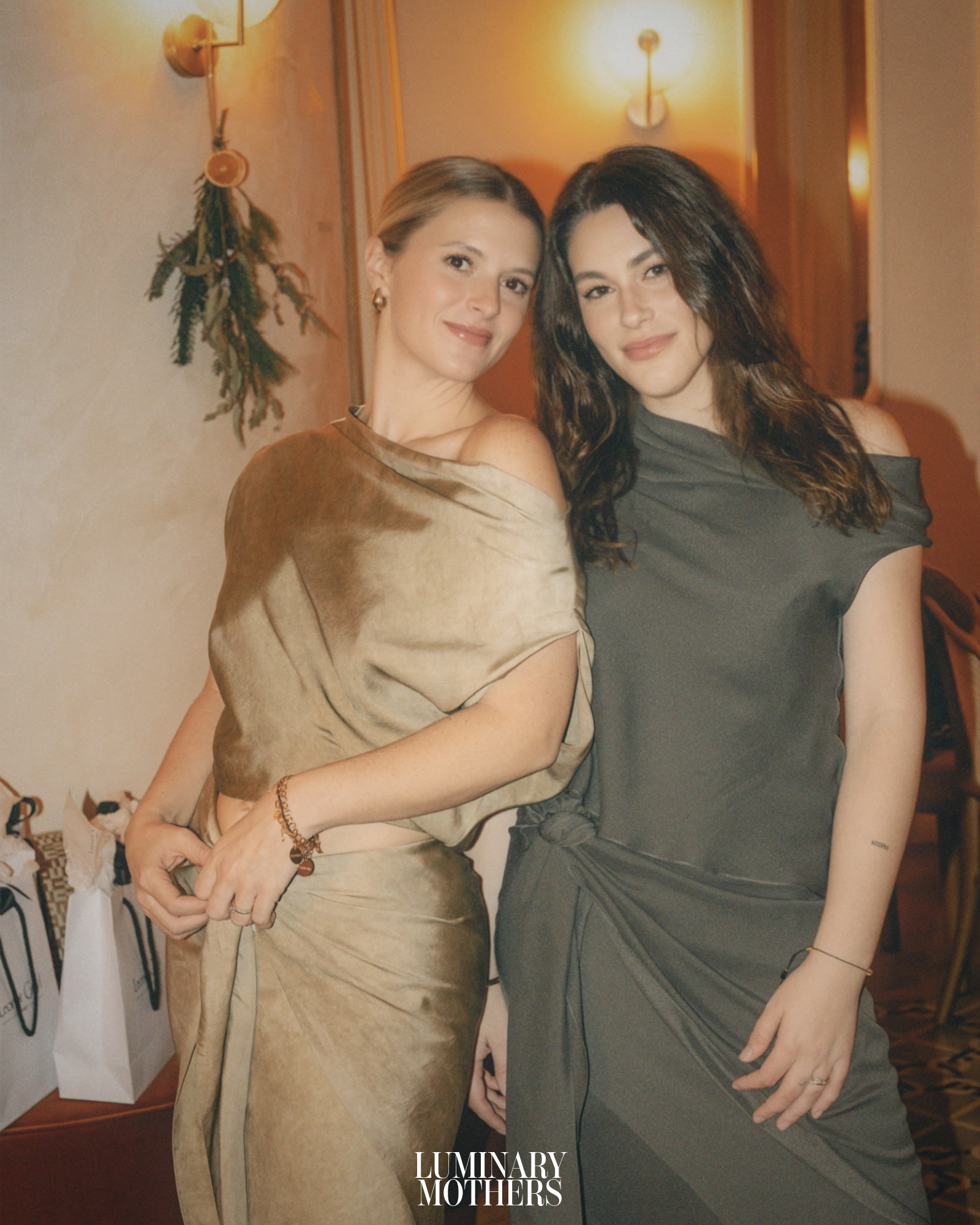
Image Courtesy of Mother Euro
Running a startup while raising children is no small task. What do you each rely on to maintain balance in your lives?
Maggie: Balancing a startup while raising children is definitely a challenge, but we've found a way to make it work. Prioritising our weekends is essential; we don't work during that time, reserving it solely for family. It’s a non-negotiable rule for us. On Fridays, we aim to limit meetings and really focus on getting everything done from Monday to Thursday.
Having one child in school and the other still very young helps, and I'm fortunate to have some assistance, which I truly appreciate. I recognise the privilege in that, but I also work incredibly hard to ensure I can provide for my family while pursuing my ambitions. Ultimately, finding that balance means committing to family time while being productive during the week.
Emily: Balance for me is something I am constantly working on. I do not think I have it perfectly figured out, but I have learned that I cannot show up for my kids or for Mother Euro if I do not also show up for myself. That looks like small things — Pilates, a date night, a coffee with a friend — and sometimes bigger things, like taking a trip to reset. I also try to remind myself that this is my first time being a mother. Just like my kids are learning to be kids, I am learning to be a mom, and I will make mistakes. Allowing myself that grace has made me more patient and present. It is not perfect, but I know I am better when I give myself space to recharge.
What kinds of stories or needs do you hear most often from women approaching Mother Euro? Is there a particular member experience that captures what Mother Euro is all about?
Emily: The most common thing I hear is, “I don’t want to do this alone.” Moving abroad can feel so isolating, especially for mothers who are leaving behind their families, friends, and the systems they know. The women who come to us want guidance, but more than that, they want connection.
One story that really captures what Mother Euro is about is from a mom who reached out shortly after she arrived in Spain. She was overwhelmed by everything — navigating healthcare, figuring out schools, not knowing where to even begin. We helped her get the practical answers she needed, but she later told me that the thing that made the biggest difference was simply not feeling alone anymore.
To me, that is exactly what we are building. Yes, we provide resources and solutions, but at the heart of it is the feeling of being held through the transition.
Maggie: Echoing what Emily said above.
How would you describe the spirit of the Mother Euro community, and where are most of your members relocating from and to?
Maggie: Friendship. We are all friends. We know one another's stories, backgrounds, needs, wants, desires - no one holds back in the community and that’s what makes it so beautiful and authentic. It's truly a safe space. It's not a Facebook group, it's not a random chat you were added to with over 300 people and you have no idea who's truly in it. These women know one another intimately, they check up on one another, they are building life long relationships. Our members are coming from all over the world. U.S., Canada, U.K., Russia, Poland, Hungry, Spain, Portugal - you name it, someone in Mother Euro is probably from there. Most are entrepreneurs, but we also have a lot of women who have a remote job situation working 9-5. I would say the majority of the women in the Mother Euro are extremely well educated, knowledgeable, kind, empathetic, and curious. Curious learners and globe trotters.
I am honestly so proud of the group of women that makes up Mother Euro. They are the coolest.
Emily: The spirit of Mother Euro is rooted in connection and care. It is women showing up for each other during a time of massive change. Our members are brave; they are reimagining their lives and taking bold steps to create something new for themselves and their families. At the same time, they are generous. They share their own stories, resources, and lessons so that the next woman does not have to feel as lost. Most of our members are coming from the U.S. and relocating to Spain, Portugal, UK, Netherlands, etc. but the feeling of the community goes beyond geography. It is really about creating a space where women feel seen, understood, and supported, no matter where they are on the journey.
“On the Mother Euro level, success is when a mom messages us saying, ‘I feel less alone because of this community.” - Emily
Portugal and Spain have become especially popular with families in recent years. Are there particular countries that get more inquiries than others?
Maggie: Yes, absolutely! Spain and Portugal have become particularly popular destinations for families looking to relocate. Among these, Spain stands out as the most frequently inquired destination. Cities like Madrid, Málaga, Mallorca, Sevilla, and Valencia receive the most interest. Following Spain, Portugal also sees a significant number of inquiries, especially for cities like Lisbon and Porto. Other countries that attract attention include France, with cities like Paris and Nice, as well as the U.K., specifically London. Denmark and the Netherlands are also on the radar for many looking to move. Overall, the trend shows a strong interest in Southern European countries, which offer vibrant cultures, temperate climates, and a welcoming environment for families.
Emily: Spain and Portugal are definitely some of the most popular for families right now. I think the mix of lifestyle, culture, affordability, and family-friendly environments is what draws people in. Spain, in particular, offers this vibrant daily life that feels both exciting and accessible. Portugal has a slower pace that many families are craving. We also get questions about Italy and France, but Spain and Portugal stand out as the places where families can most easily imagine themselves building a life.
What has been the most rewarding feedback or story you’ve heard from a member so far?
Maggie: They feel like they’ve formed genuine lifelong friendships, having finally found their people who understand and resonate with them. In my opinion, one of the most beautiful experiences as a human is the ability to be truly seen and understood by another person.
Emily: One of the most rewarding things I have heard was from a mom who told me that Mother Euro made her feel like she could actually stay. She had been ready to give up and move back because the adjustment was so much harder than she expected. But after connecting with our community, she said she finally felt understood and supported. That hit me deeply, because it reminded me why we started this in the first place. It is not just about logistics. It is about helping women feel like they are not alone in the hardest parts, and giving them the strength to keep going until the joy outweighs the struggle.
You’ve described Mother Euro as a collective, not just a service. How do you see your work fitting into the larger cultural wave of mothers relocating abroad?
Maggie: I see Mother Euro as more than just a service. It embodies a collective spirit that resonates with the growing trend of mothers relocating abroad. In recent years, many mothers have sought to carve out better opportunities for their families, pursue personal growth, or simply explore new cultures. My work fits into this larger cultural wave by providing a supportive community and resources that empower mothers during this transition. We are creating a network where mothers can share their experiences, challenges, and triumphs, fostering connections that go beyond geographical boundaries. This collective aspect not only addresses practical needs, such as relocation logistics and cultural adaptation but also emphasizes emotional support, camaraderie, and understanding. People are even going into business together and starting ventures together. Ultimately, I believe our work contributes to a movement that celebrates global motherhood, highlights diverse experiences, and champions the idea that together, we can thrive in new environments.
Emily: I think we are part of a bigger moment where mothers are giving themselves permission to want more. For so long, the narrative has been that you just push through, you sacrifice, you do it all. What I see now is women saying, “I want a life that feels balanced, safe, and joyful for my family.” Mother Euro is one piece of that cultural wave. We are giving women the practical tools to make the move, but we are also giving them a community to hold them through it. It is both — the head and the heart — and I think that duality is what makes it powerful.
How did you decide to combine practical relocation support (immigration, housing, schools) with community building, emotional support, and cultural exchange?
Maggie: The decision to combine practical relocation support with community building, emotional support, and cultural exchange came from my own experiences and conversations with other mothers who have navigated similar journeys. I realized that when a family relocates, especially with children, it’s not just about the logistics (immigration paperwork, housing, and schools) but also about the emotional and social aspects of adjusting to a new environment. As mothers, we instinctively consider the well-being of our entire family. It’s crucial to address the practical challenges, but equally important is to create a nurturing community where mothers can share their stories, find support, and connect with others facing similar situations. When we support each other emotionally and culturally, we can better navigate the complexities of relocation. By integrating these elements, we aim to create a holistic support system that values both the logistical and emotional aspects of moving abroad.
This approach not only eases the transition but also fosters a sense of belonging and encouragement, allowing families to thrive in their new homes. Ultimately, it's about empowering mothers to feel confident in their decisions, knowing they have a reliable support network to lean on along the way.
Emily: For us, it was never really a choice between the two, because both are necessary. When I moved, I needed answers about visas and healthcare, but I also needed someone to sit with me and say, “yes, this is really hard.” You can have every piece of paperwork figured out, but if you feel lonely and disconnected, the move will not feel like a success. On the other hand, a community without practical help can leave you stuck.
We built Mother Euro around the idea that both matter equally, because that is what we were craving ourselves.
What have been the biggest challenges in building this hybrid model?
Maggie: Fostering a sense of community takes time, especially when families are adjusting to new environments and may feel disconnected. Building trust and encouraging participation in cultural activities require understanding and patience. Community isn’t built in a day, it demands time, care, love, and deep understanding. Many people desire the benefits of a supportive community, a “village”, but fewer are willing to actively contribute to its growth. This willingness to engage is essential for cultivating a thriving community. The phrase, “Everyone wants a village, but no one wants to be a villager,” speaks to this dynamic: while people want the support of a community, they often hesitate to invest the effort needed to become active, contributing members.
A true village is created through active participation, showing up when it’s inconvenient, helping others, and being present during their challenges, not merely through passive longing. This highlights the gap between the desire for community and the commitment required to foster it. We are constantly building community and understanding that authenticity and finding the right people who get it, takes time.
Emily: One of the challenges has been explaining what we do in a way that captures both sides. People understand relocation services, and they understand community, but putting them together is less familiar. Another challenge has been balancing the intensity of building a business with raising young children.
There are days when it feels like too much. But those are also the moments when I remind myself why we are doing this. The same challenges we are facing are the ones other mothers are facing too, and that makes the work feel more authentic.

Image Courtesy of Mother Euro
You’ve hosted some beautiful IRL experiences, like the candlelight dinner in Madrid and the upcoming Mallorca launch. How do events like these fit into your long-term vision for Mother Euro?
Emily: The events are where everything truly comes alive. Online support is valuable, but there is something transformative about being in a room with other women who understand what you are living. Our dinners, meetups, and retreats create moments of connection that stay with you long after the evening ends. They give women the chance to exhale, to feel seen, and to form friendships that make life abroad not only possible but joyful. Looking ahead, I see these gatherings as the culmination of our work — the spaces where we hold each other, celebrate together, and bring women from around the world into one community.
Maggie: Echoing what Emily said above.
What advice would you give to a mother considering a move abroad who feels overwhelmed or unsure where to start?
Maggie: First I would identify what’s most important to you and your family. This could include school options for your children, job opportunities, community support, and healthcare facilities. Having clear priorities will guide your decision making.
Emily: My advice is to take a deep breath and know that it is okay to feel both terrified and excited. When I moved, I had two small children and I often felt like I was starting over completely. It was overwhelming. What helped me was realizing I did not have to do it all at once or alone. Talk to people who have done it, ask the small questions as well as the big ones, and allow yourself to feel the full range of emotions. That is why we built Mother Euro — so no one has to go through it without a support system.
“Friendship. We are all friends. We know one another’s stories… no one holds back in the community.” - Maggie
What’s your vision for Mother Euro in the next five years?
Maggie: For women to connect through Mother Euro at any stage of their journey, feeling held, seen, and heard, and to know they have a supportive girl gang of women who have their backs.
Emily: In five years, I see Mother Euro as the go-to community for women and families moving abroad. I want women to know that no matter where they are in the journey, they have a place here where they will be seen, heard, and supported. I imagine local chapters across Europe, more in-person events, and a wider network of partners and resources so that every stage of the transition feels easier. My vision is that when a woman says, “I want to move abroad,” the first thing she thinks of is Mother Euro.
Finally, what does success look like for you, not just for Mother Euro, but for the broader movement of mothers reimagining where and how they raise their families?
Maggie: Creating a supportive community where mothers feel empowered to share their experiences and challenge traditional parenting norms. For Mother Euro, it’s about fostering collaboration and providing resources that allow mothers to thrive. On a broader scale, success looks like a societal shift toward valuing diverse parenting styles, advocating for policies that support work-life balance, and ultimately building empowered families that contribute to a more compassionate and equitable society.
Emily: For me, success looks like women giving themselves permission to imagine something different and then actually making it happen. It looks like mothers supporting each other instead of competing. On the Mother Euro level, success is when a mom messages us saying, “I feel less alone because of this community.” On a broader level, success is part of a cultural shift where family life is valued, where mothers are supported, and where raising kids can feel joyful instead of impossible.
Follow Mother Euro on Instagram here. Visit Their Website Here.