
The Motherhood Specialists.
How women are turning deeply specific maternal experiences into businesses.

In our Start-Up Mothers piece, we explored that motherhood and ambition aren’t opposing forces. For many women, motherhood is the catalyst, the moment that turns frustration into clarity, and clarity into a business. We continued this with our second follow-up piece, The Motherhood Market Is Growing Up (Finally), dissecting how motherhood is finally being treated like what it actually is: a lifecycle economy, not a nine-month moment, with real purchasing power, recurring needs, and founders building the infrastructure the market ignored for too long.
For years, businesses built around motherhood have been treated as niche by default. Too specific. Too personal. Too closely tied to one stage of a woman’s life to become a serious commercial proposition. But what looks narrow from the outside can feel enormous to the women living it.
A new generation of female founders are building businesses around the parts of motherhood that larger companies have overlooked, misunderstood, or simply never considered valuable enough to serve. These are not necessarily businesses designed to reach everyone. They are deliberately specialised: created for particular women, particular experiences, and particular needs.
From talent agencies representing voices within motherhood and parenthood to audio platforms supporting the emotional realities of early motherhood, postpartum food services and bakehouses created around breastfeeding, these founders are not asking how they can appeal to the widest possible audience. They are asking a more useful question: who is still being missed?
That is where businesses such as Maggie Management, Mother.fm, The Food Doula and Milk It Bakehouse become especially interesting. Each takes something highly specific and treats it with the depth and ambition it deserves.
The women creating these businesses possess an advantage that cannot easily be replicated through market research or focus groups. They understand the language mothers trust, the problems conventional businesses fail to solve and the subtle realities that are often invisible to anyone who has not experienced them firsthand.
Motherhood gives them more than the inspiration for an idea. It gives them specialist insight.
Perhaps this is where we need to reconsider the word “niche.” It is often used to imply that a market is small, limited or unlikely to scale. But specificity can create relevance. It can build trust, loyalty, authority and a far clearer reason for a business to exist.
These businesses are not small because they are specific. They are strong because they know exactly who they are for.
By Alice Codford
Small Thought, Big Idea
In business, founders are often encouraged to think bigger. Broaden the audience. Make the proposition more universal. Avoid building something that feels too narrow. But motherhood-led businesses are challenging that logic.
A mother looking for emotional support during the first years after birth may not want another generic wellness platform. She may want something created around broken sleep, identity shifts, overstimulation, nursery drop-offs, returning to work and the pressure to appear as though she is coping.
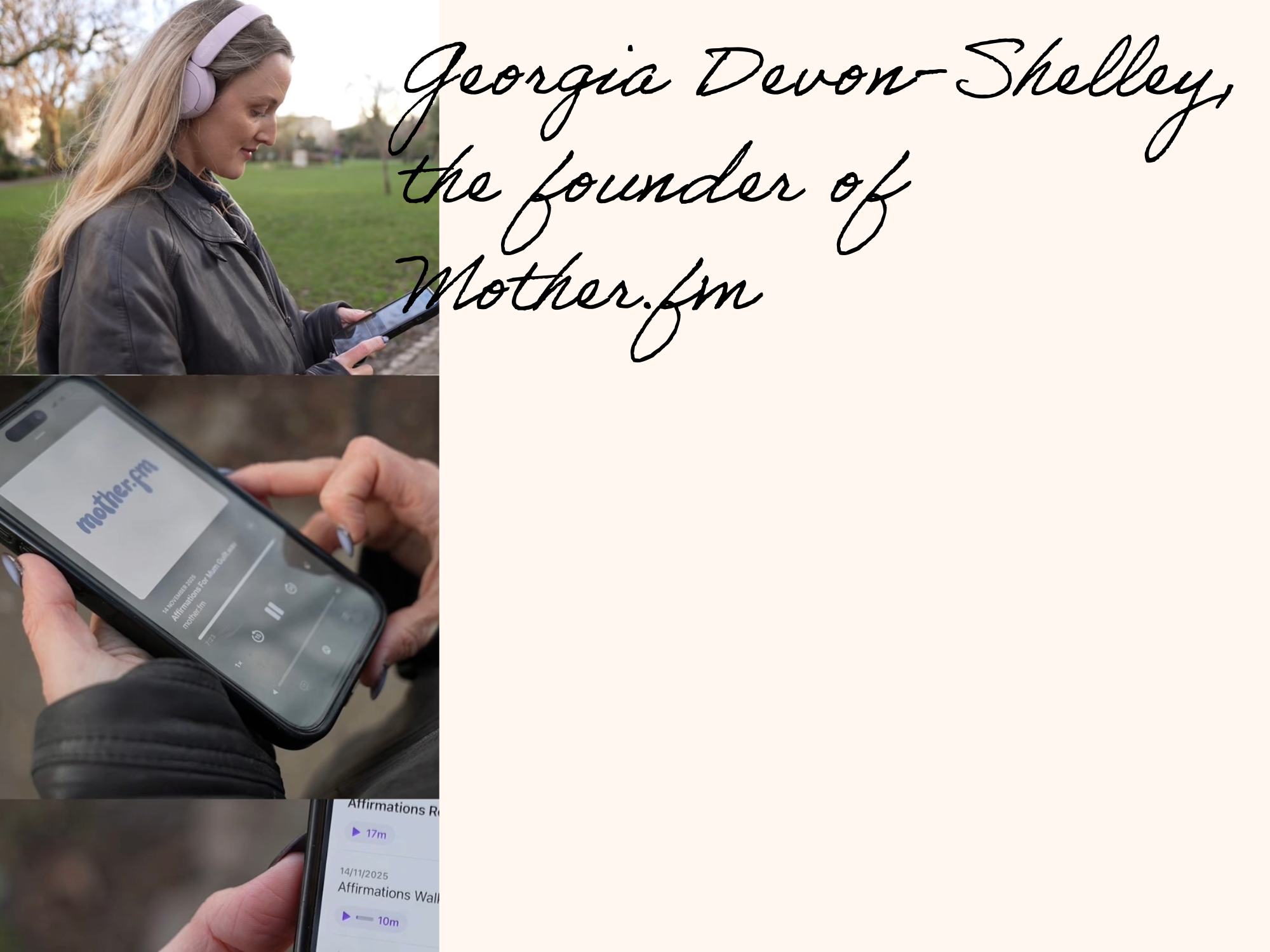
That specificity sits at the heart of Mother.fm. Founder Georgia Devon-Shelley describes the platform as a “pocket-sized pep talk for motherhood,” with audio coaching and affirmations created around the moments mothers actually experience. Subscribers can even request topics themselves. One request, a “pep talk for nursery drop off,” went on to become one of the platform’s most-listened-to audios.
It is a small detail that proves a much bigger point: sometimes the more specific the problem, the more deeply the solution resonates.
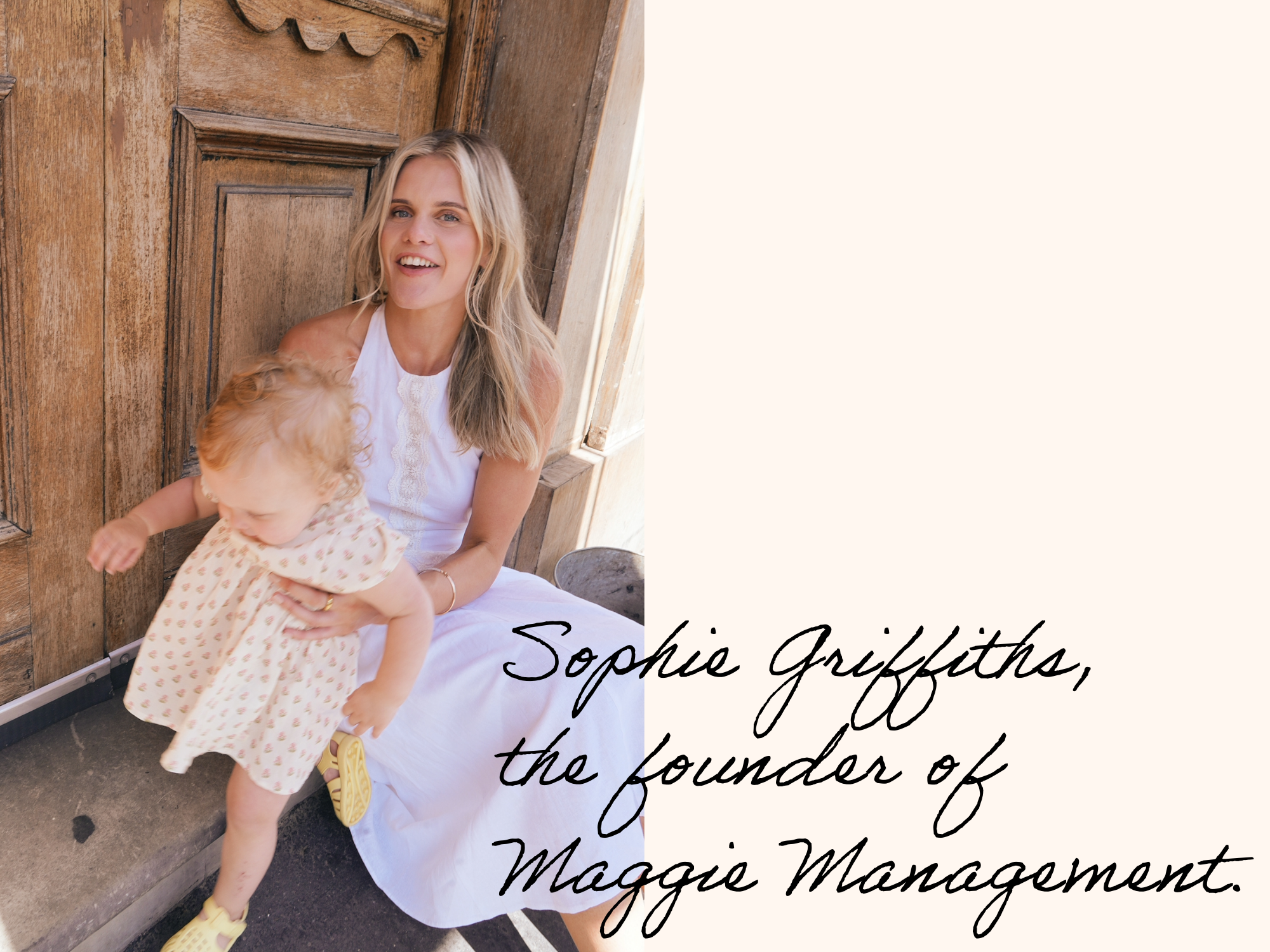
Maggie Management is similarly precise. Founder Sophie Griffiths had spent more than a decade working in talent management when, during her first pregnancy, she began imagining an agency rooted and led by motherhood. Rather than treating parenting creators as a subsection of generic lifestyle talent, Maggie specialises in representing them.
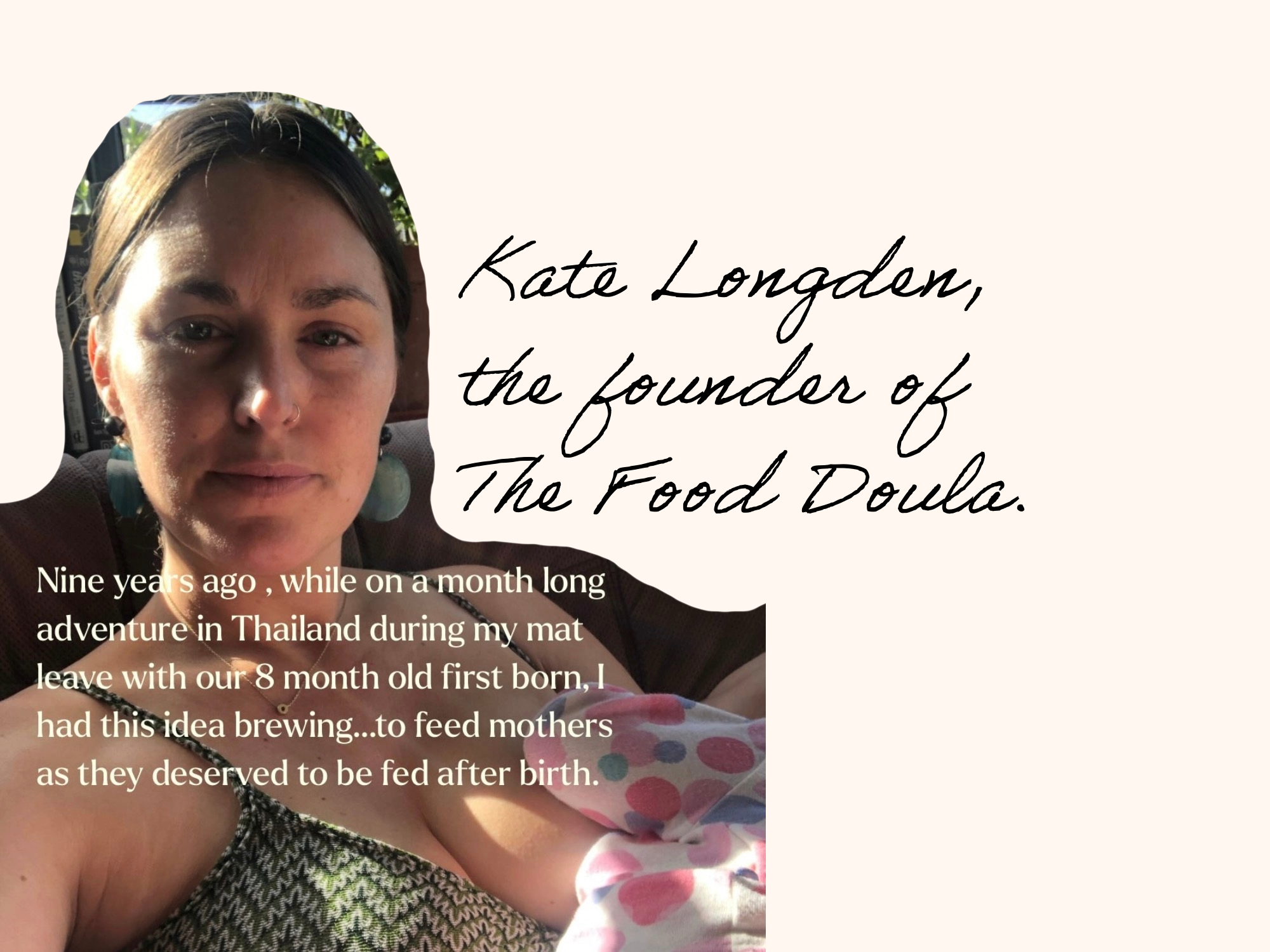
Then there is The Food Doula, founded by Kate Longden nearly eight years ago, at a time when postpartum care had nowhere near the visibility it has today. After the birth of her first daughter, Longden realised how much preparation had gone into birth and how little into what happened afterwards.
She remembers “time folding in on itself when day rolls into night and night into day.” The meals she had batch-cooked disappeared within days and she found herself wishing there were a service created specifically to nourish women recovering from pregnancy, birth and feeding. Research showed her there was no UK-wide meal delivery service centred around maternal nourishment.
So she built one.
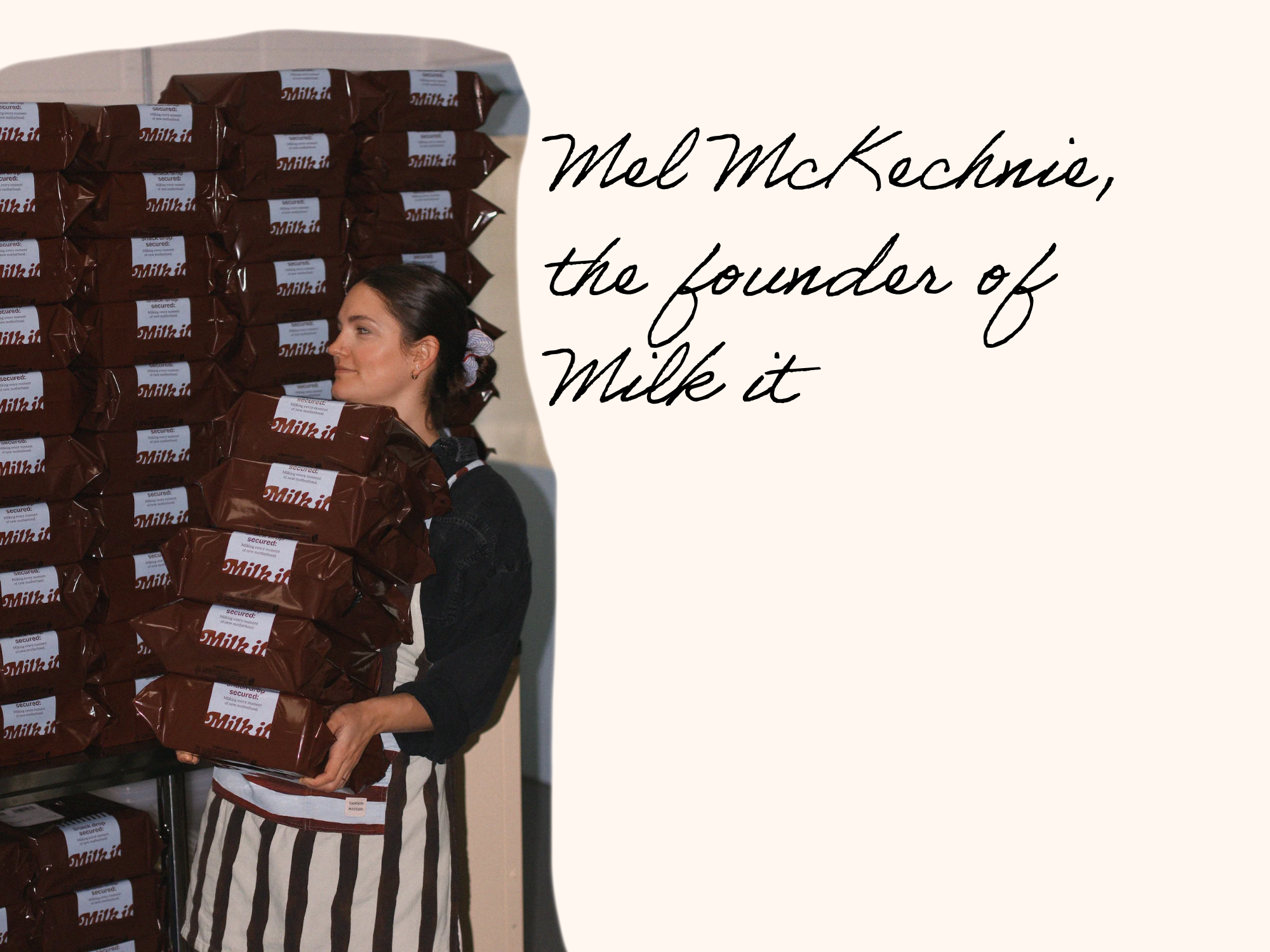
Milk It Bakehouse began on an even smaller scale. Founder Mel, a doula, started making cookies for her own clients with no grand plan to turn them into a business. She simply understood that something sweet, nourishing and easy to reach for could feel like a lifeline in the middle of a long day or night of caregiving.
Then the cookies caught on.
“Somewhere in there I realised what I’d actually built was a way to mark the moment,” she says.
That idea is central to Milk It. Breastfeeding may be described as natural, but natural does not mean easy, instinctive or insignificant. Mel wanted to treat it as something remarkable rather than assumed.
“Champagne exists to mark one kind of occasion. Milk It exists to mark another.” she adds.
An idea does not have to be universal to be valuable. What once looked too specific to build around can become the exact reason a business connects so deeply.
A Life Experience = A Business Opportunity
The familiar founder story often begins with personal frustration: a woman encounters a problem, cannot find the right solution and decides to create one herself.
But there is something more sophisticated happening here.
The real advantage is not simply that the founder experienced the problem. It is that she developed knowledge through living it.
Sophie Griffiths describes motherhood as “an absolute rebirth for me.” While pregnant, she had been terrified that becoming a mother might mean losing herself. Instead, she says the opposite happened. Her daughter Etta gave her the confidence to take the leap and build Maggie Management, while the women she connected with through motherhood helped shape the community around it.
Georgia Devon-Shelley’s experience is similarly inseparable from Mother.fm. Just weeks postpartum, she found herself reaching for techniques she had once used to help artists bring their adrenaline down after arena shows, only now, she was using them on herself at three or four in the morning with a newborn.
Breathing techniques, pressure points and somatic tools became ways of navigating overwhelm. She began adapting them to motherhood: squeezing the handle of a pram, using pressure points in the hand, finding ways to regulate without requiring silence, stillness or twenty uninterrupted minutes that may simply not exist.
Mother.fm grew from that insight.
For Kate Longden, it was her first postpartum experience that revealed the gap. By the time she had her second child five years later, The Food Doula already existed and nourishment became central to her own recovery. She had experienced both sides: what it felt like to go without that support, and what it felt like to receive it.
Mel’s relationship with motherhood shaped Milk It differently. She deliberately waited until her youngest started school before beginning this next chapter of her work.
“You can’t hand someone a life raft from inside your own sinking boat,” she says.
Living in the UK away from her Canadian family, navigating postpartum anxiety after her first child and having her second at the height of the pandemic gave her an intimate understanding of how isolating early motherhood can feel. She describes what she does now as a kind of “inner mother work”: mothering the version of herself who had once needed more support by giving other women some of the things she was missing.
These founders are not simply their own target customers, they possess a fluency in the problem.
They understand the language mothers trust, the moments when support is actually needed and the realities that can be invisible to someone looking at motherhood purely as a demographic.
That kind of knowledge is difficult to manufacture.
A larger company may be able to imitate a product feature, launch a competing service or enter the same category. It is far harder to reproduce the instincts that come from genuinely understanding the person on the other side.
Small Audience, Serious Business
The word “niche” often carries an assumption: that a business serving a tightly defined audience must have limited potential.
But scale does not always have to mean reaching everyone.
A specialist business can grow through depth rather than breadth. It can build stronger loyalty, clearer positioning, more relevant partnerships and something increasingly valuable in a crowded market: trust.
What is happening at Maggie Management is a useful example.
Griffiths says the response from brands has been incredibly positive, with authenticity now sitting at the centre of many briefs. More interestingly, she has watched the role of motherhood creators expand.
“They’re no longer just being approached for parenting campaigns,” she says. “They’re leading fashion, interiors, beauty, travel and wellness campaigns too because audiences trust them.”
That distinction matters. Their specialism does not trap them inside motherhood. It is precisely what gives them authority beyond it.
Mother.fm offers another version of the same lesson. Its subscriber-request feature allows the platform to become more specific as it grows rather than more generic. Devon-Shelley is now expanding the proposition further, with plans for postnatal timelines, partner-sharing tools and resources designed around the mental load.
Her aim is not simply to create another thing mothers have to do in order to cope. It is to build resources that bring both parents into the conversation and help identify and redistribute some of motherhood’s invisible labour.
The Food Doula has created loyalty differently. Longden says mothers who receive its food as gifts often go on to send it to others. Previous customers return during subsequent pregnancies. Some take the meals into hospital. Others describe the food as feeling like it had arrived from a supportive friend.
Milk It has found a similar dynamic. Mel says the word she hears most from customers is “seen.”
So much of the postpartum world revolves around the baby: are they feeding, sleeping, gaining weight, thriving? Milk It deliberately turns some of that attention back towards the mother.
And that has created another audience around the business: the people who love her.
Friends and family often want to show up for a new mother but do not know what to send, how to help or whether arriving in person will feel intrusive. Milk It gives them a way to say I see you without asking anything in return.
Mel says many mothers eat the cookies in the middle of the night, during those quiet stretches when it can feel as though they are the only person awake in the entire world. “It’s a small thing, but doesn’t feel small at 3am.”
Perhaps that line gets closest to what the word “niche” so often misunderstands.
A cookie made for a breastfeeding mother can look small. An audio for nursery drop-off can look small.
Meals created specifically for postpartum recovery can look small. Specialist representation for motherhood creators can look small. But to the woman who needs that exact thing at that exact moment, it can feel enormous, and these founders know that.
Maggie Management operates within the creator economy but approaches it through a motherhood specialism. Mother.fm takes the emotional realities of motherhood and builds practical, on-demand support around them. The Food Doula operates within food delivery but builds entirely around maternal nourishment and support. Milk It turns baking and gifting into a way of recognising a particular experience that is so often expected rather than celebrated.
And they don’t need to become broader businesses to prove they can grow, and perhaps that is the misconception worth dismantling. A specialist business does not necessarily grow by becoming less specific. Sometimes it succeeds because it becomes the most trusted, authoritative or relevant name within the space it chose to understand deeply.
Representation matters. Emotional support matters. Nourishment matters. Recognition matters. The invisible work of motherhood matters.
Women’s experiences do not suddenly become commercially significant when they can be made universal. They are significant because they are real, recurring and shared by people who have gone too long without businesses designed specifically for them.
The motherhood specialists understand this. They are not building for everyone. They are building with precision, authority and a clear understanding of who has been overlooked.
And that may be exactly why they work.
