
Zoe Blaskey on Motherkind, Matrescence & Modern Motherhood.
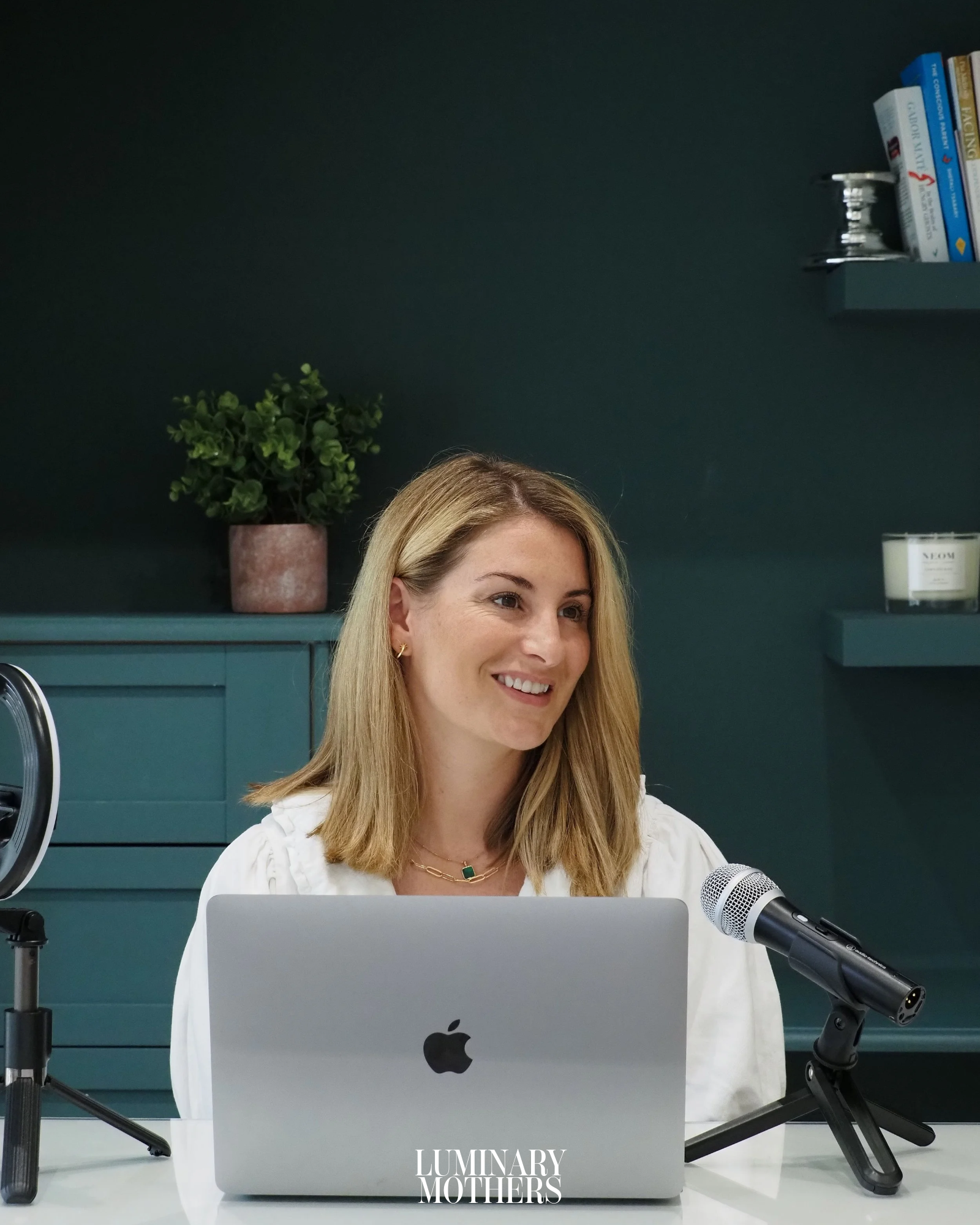
Image Courtesy of Zoe Blaskey
The first time Zoe Blaskey realised motherhood had rewired her life, nothing looked dramatic from the outside. She was walking the same road to the same coffee shop, in the same shoes, and yet everything felt different. Her body, her priorities, even the way her mind kept looping back to her baby when she wasn’t there. “It hit me like a lightning bolt,” she tells us. “I will never be the same again.” That moment didn’t send her searching for a way back to the “old” her, it sent her looking for language, tools, and truth about what was really happening to women in early motherhood.
Zoe is the founder of Motherkind, a platform (and now bestselling-feeling movement) built for the woman behind the mother: the one navigating identity shift, invisible labour, nervous-system overwhelm, and the constant pressure to “cope.” A qualified transformational coach and host of The Motherkind Podcast — which explores the emotional, personal, and professional transformation of becoming a mother — Zoe has made it her mission to replace shame with self-compassion, and perfectionism with something far more sustainable: good enough, with support. It’s the mess and magnitude of motherhood (not the highlight reel) that sits at the heart of everything she creates.
Her best selling book, Motherkind, distils years of research, coaching tools, and conversations with world-leading experts into something you can reach for at 3am — not to “fix yourself,” but to understand why you’re not failing, and what actually helps. In this conversation, Zoe speaks candidly about the parts we rarely say out loud: breastfeeding that nearly broke her, the perfectionism she had to loosen her grip on, the boundaries that once felt terrifying to set, and the single word that changed everything for her: matrescence. Because if Motherkind has a manifesto, it’s this: motherhood isn’t something you bounce back from. It’s something you’re allowed to grow through.
By Alice Codford
ON MOTHERHOOD
Alice: You talk a lot about motherhood as a transformation, not something you bounce back from, but something you grow through. When did you first realise: oh, this is changing me?
Zoe Blaskey: I remember walking to meet a friend for coffee when my eldest was a few months old. I was walking the same road, wearing the same shoes, heading to the same coffee shop and nothing felt the same. My body was different, my priorities were different, my mind was consumed with thoughts of her even though I wasn't with her. And it hit me like a lightning bolt: I will never be the same again. I won't ever get back to the 'old' me. How can I? I have grown, birthed and am responsible for another human. I am changed. That was the moment I stopped fighting the transformation and started trying to understand it.
Was motherhood what you expected? What surprised you most, in you, your relationships, your body, your mind?
Zoe Blaskey: Loving my child was the easy part. It was everything else that surprised me. The guilt, the perfectionism, the fear, the constant inner critic, the mental load, how every relationship in my life changed. I wasn't prepared for any of it. I thought I'd be prepared because I'd spent a decade in therapy, trained as a coach, done yoga teacher training, done NCT. But without knowing the word matrescence, I thought I was failing.
“I won’t ever get back to the ‘old’ me. How can I? I have grown, birthed and am responsible for another human. I am changed.”
What's been one of the hardest parts of motherhood, and what genuinely helped you through it?
Zoe Blaskey: Breastfeeding nearly broke me. I had this vision of long days with my newborn nuzzling peacefully at my breast. The reality was shards of glass cutting through my nipple with every feed, mastitis, bleeding and I still wouldn't give up because my perfectionism wouldn't let me. I pumped every single feed when I started giving her bottles. I was either feeding, cleaning the pump, or pumping. It was so tough. What helped was eventually understanding that it wasn't dedication driving me, it was perfectionism and control, two of my most loved coping behaviours that were never going to work in motherhood. With my second, I did mix feeding from day one and formula from six weeks. The difference to my mental health was enormous. Oh, and the sleep deprivation (but I suspect everyone says that!).
What's been one of the highest points so far, a moment you'll never forget?
Zoe Blaskey: Watching my youngest do a puzzle, talking herself through it. She was picking up each piece and saying to herself, louder and louder with every failed attempt, "You can do it. I believe in you." I burst into tears because I realised rewiring my negative self talk was having a massive impact on her and it was an incredible moment for me.
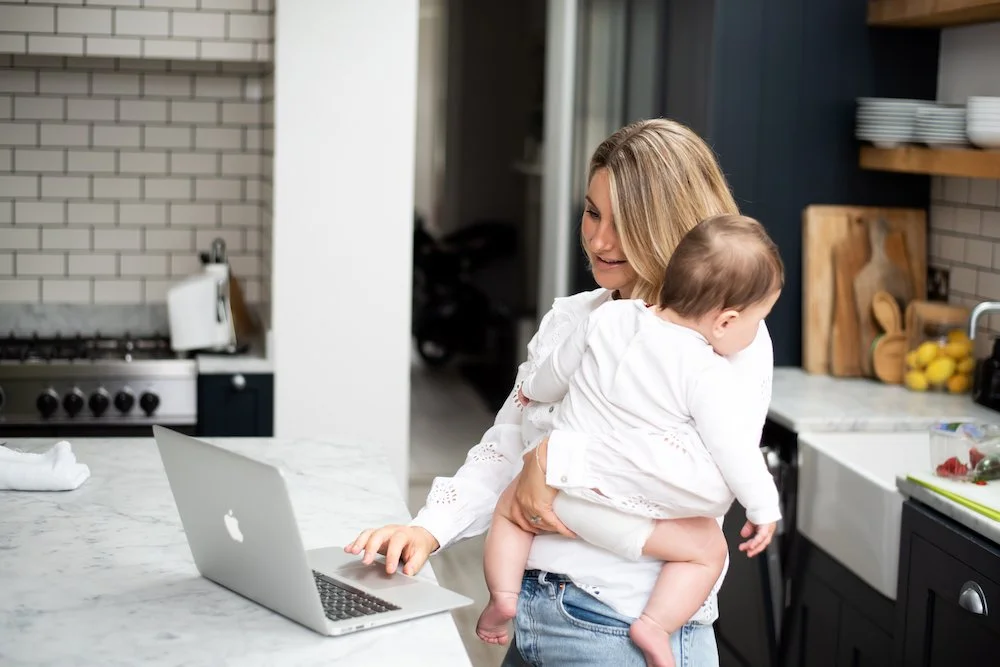
Image Courtesy of Zoe Blaskey
Do you remember a time during the early days of motherhood where you didn't recognise yourself? What helped you come back to you?
Zoe Blaskey: Absolutely. I felt like I was performing a role I didn't belong in, like when I was a little girl putting on my mum's high heels and necklaces pretending to be a grown-up. I was awkward pushing the buggy, my clothes didn't fit, my days were unrecognisable. What helped me come back to myself was discovering the word matrescence, the developmental process of becoming a mother. Hearing that word in a podcast episode, I felt my shoulders drop and my shame instantly lessen. I wasn't doing it wrong. I was going through my matrescence. Knowing there was a word for it, that it was meant to be messy, that there was nothing wrong with me was so powerful.
On the days where it feels like everything is too much — work, parenting, life — what helps you reset?
Zoe Blaskey: A few things. The breathing exercises, box breathing or the straw breath, because they genuinely switch your nervous system from alarm to calm within seconds. Dancing with the girls to Taylor Swift's Shake It Off, which sounds ridiculous but actually completes the stress cycle. And asking myself one question: "What do I need right now?" Not what does everyone else need - what do I need. That simple question has been transformative for me, because for years I never asked it. I also have my energy givers list on the wall of my office, and I try to do at least one thing from it every day, even just drinking a big glass of water before my tea in the morning.
“That was the moment I stopped fighting the transformation and started trying to understand it. I wasn’t doing it wrong. I was going through my matrescence.”
What has motherhood taught you about boundaries? Did you have them before, or did you build them after becoming a mother?
Zoe Blaskey: I had almost none before. I was a people pleaser to my core, to be honest I would rather disappoint myself than anyone else. Motherhood forced me to change, because suddenly my time wasn't just mine. I remember the first boundary I set turning down a family lunch when I was sleep-deprived and desperately needed the afternoon alone while Guy took our daughter. The courage that took felt completely disproportionate to the situation. But I did it. And the world kept spinning. Nobody hated me!! And since then I’ve become incredibly boundaried with my time and energy.
What do you wish you'd known before becoming a mother?
Zoe Blaskey: I wish someone had told me about matrescence. That the becoming of a mother is its own developmental process, just like adolescence messy, disorienting, full of identity shifts and contradictory emotions, and completely normal. If I'd known that going in, I would have spent far less time thinking there was something wrong with me. I also wish I'd known that you don't get your old self back and that's not a loss, it's a becoming. Your old self is a shadow of the woman you've become. I wasted so much energy trying to get back to someone I was never going to be again.
ON MOTHERKIND AS AN IDEA AND WHY IT RESONATED
What was the original spark for Motherkind? The real moment you thought, "I need to create/find a solution to what I can't find"?
Zoe Blaskey: I was sitting on the living room floor with my eleven-month-old daughter who was red-faced and crying, my nervous system completely flooded, wanting to run away but desperately wanting to stay present. And I went to the parenting books scattered across my messy kitchen for comfort and all I found was more pressure, more rules, more reasons to feel guilty. Then I googled it. And what came back was articles about gin and bouncing back. I felt this surge of anger…. where was the expertise for the emotional experience of motherhood? So I bought a £50 microphone and started begging wise minds around the world to speak to me. It came from a completely selfish need to feel better.
“I felt this surge of anger… where was the expertise for the emotional experience of motherhood?”
You've used language that so many women feel: guilt, comparison, exhaustion, identity wobble. Why do you think modern motherhood is especially hard right now?
Zoe Blaskey: We are the first generation raising children with social media, mothering through a post-pandemic world, in the middle of a young people's mental health crisis. We've lost our village, we're often mothering without our families nearby, more of us are working than ever before, yet we're still carrying the majority of the emotional and invisible labour at home. We know more than ever about the profound importance of the first five years of a child's life, but we don't have the support systems to implement all that knowledge so we feel like we're failing constantly. And we're doing all of this inside a culture of intensive mothering, where the accepted ideal is a mother who gives absolutely everything, all the time. It's a perfect storm.
When did you realise that women didn't just resonate with your message but that it was making a difference for them?
Zoe Blaskey: When the messages started coming in after the matrescence episode. Hundreds of them. The thread running through every single one was: "I no longer feel like I'm failing. Knowing this word has replaced self-criticism with self-compassion." That was the moment I knew this wasn't just resonating it was changing how women felt about themselves. When a word or an idea moves someone from shame to self-compassion, that's transformation. I still get messages like that every single day, and I never take it for granted.
What do you think people still misunderstand about modern mothers? Even well-meaning partners, friends, family, employers?
Zoe Blaskey: That the hardest part isn't the visible work. It's the invisible work, the mental load, the constant cognitive hum of everything that needs to be remembered and planned and anticipated and worried about. And the emotional labour of being the emotional shock absorbers of the whole family: holding your toddler's meltdown, your partner's work stress, your own anxiety, your parents' health worries, all at once. People see a mother and think they see someone who is coping. What they often don't see is someone who is holding everything, for everyone, with nothing left for herself.

Images Courtesy of Zoe Blaskey
When did you feel the shift from "this is a promising idea" to "this is working"?
Zoe Blaskey: When it started spreading word of mouth through school WhatsApp groups and GP surgeries. I hadn't spent any money on marketing. Mothers were just passing it to other mothers who needed it. That told me it was filling a genuine gap not because I'd promoted it brilliantly, but because women were hungry for it. When you reach 150 countries organically, through women sharing with other women, you know you're touching something real.
If Motherkind had a manifesto in one sentence, what would it be?
Zoe Blaskey: Motherhood is meant to transform you.
ON THE PODCAST
What did you want it to be when you started and what has it become?
Zoe Blaskey: When I started I wanted answers. I was confused and struggling and I wanted to understand my own emotional experience of motherhood. What it has become is something so much bigger than that a movement of mothers who refuse to be invisible, who are done with the martyr model, who want to be models for their children instead. Over eight million listens, 150 countries, and what I'm most proud of is that it travels through communities of women passing it to each other. That was never the plan. That's just what happens when something is genuinely needed.
“So I bought a £50 microphone and started begging wise minds around the world to speak to me.”
Which conversation or concept changed you the most as a mother?
Zoe Blaskey: Matrescence, without question. Hearing that word changed my life. But close behind it was learning about the stress response and the nervous system. Understanding that when I was 'dissociating' during my daughter's crying, when I felt that grey fog come over me and couldn't emotionally connect that wasn't me being a bad mother. That was my nervous system in freeze response. Understanding the biology of it gave me compassion for myself, and then the tools to change it.
Are there patterns you see again and again in mothers?
Zoe Blaskey: Always. The core belief at the bottom of almost everything is: I'm not good enough. Not good enough as a mother, not good enough as a partner, not good enough as a friend. And from that belief flows the overgiving, the overcontrolling, the perfectionism, the inability to ask for help. Almost every mother I've worked with has arrived at that same point. And it breaks my heart every time, because it isn't true. The other universal pattern is the belief that their needs don't matter that to be a good mother means to put yourself last. Both of these need dismantling.
What topic do you think we still avoid talking about honestly when it comes to motherhood?
Zoe Blaskey: Rage. Maternal anger. The red mist that descends when you're running on no sleep and everyone needs something from you simultaneously. It's almost universally experienced and almost never spoken about honestly, because we're terrified of what it says about us. But anger is a normal response to stress. It doesn't make you a bad mother it makes you human. And when we don't talk about it, mothers sit alone with their shame thinking they're uniquely broken. They're not.
What's an episode you'd recommend to a mother who feels lost in herself right now?
Zoe Blaskey: The matrescence episode. Start there. Understanding that losing yourself is part of the process — not a sign that something has gone wrong — is the foundation for everything else. Once you know you're not failing, you can start building.

Images Courtesy of Zoe Blaskey
ON THE BOOK, MOTHERKIND
What made you decide the work needed to become a book?
Zoe Blaskey: I wanted to create exactly what I wished I'd had sitting on that living room floor. A resource that could reach a mother at 3am, in the dark, who had no one to call and no time for a podcast. Something she could hold in her hands. I wanted to condense thousands of hours of research, interviewing and coaching into something simple, applicable and time-efficient. And I wanted the tools to be there forever — not just in someone's headphones on a commute but somewhere they could return to, again and again.
The book reframes "self-care" and challenges the idea of balance. What do you think we've been sold that just doesn't work?
Zoe Blaskey: Both of them, honestly. Balance doesn't exist in motherhood there is always tension, always a competing need, and pretending otherwise just gives us another way to feel like we're failing. And self-care as it's currently sold, the face masks, the candles, the bath bombs has become synonymous with two things mothers are desperately short of: time and money. It also places the solution on the outside, when the real work is internal. I replaced both concepts in the book with energy management — understanding what gives you energy and what drains it, and making tiny daily adjustments. It's not glamorous. But it works.
Was there a chapter you found hardest to write?
Zoe Blaskey: The guilt chapter. Because guilt had been my constant companion for so long, and writing it meant really sitting with why. Realising that 80% of what I'd been calling guilt wasn't guilt at all — it was the discomfort of doing things differently, or my inner critic, or absorbing someone else's feelings — that was genuinely liberating. But it meant acknowledging all the years I'd spent carrying something I didn't need to be carrying.
What's the single most powerful tool in the book?
Zoe Blaskey: The "What would I say to a good friend?" tool. It's so simple it almost sounds too simple. But we are so much kinder to others than to ourselves, and this single question can instantly access that kindness and turn it back on yourself. I use it every single day. It costs nothing, takes seconds, and it interrupts the inner critic mid-flow. If you only take one thing from the book, take that.
What's the most moving message you've received from a reader?
Zoe Blaskey: A mother telling me she'd gone from not being sure she wanted another baby because she felt she'd gotten her first experience so wrong and found it so hard, to reading the book and then being pregnant with her second, after learning about matrescence. She said, "I now look back on that time with compassionate, kind eyes." That's everything. That's the whole point.
ON IDENTITY, AMBITION + CAREER
How did becoming a mother change your relationship with ambition?
Zoe Blaskey: It clarified it completely. Before motherhood I was ambitious in a vague, external way chasing job titles and status without really knowing why. Motherhood gave me a why that was bone deep. I wanted to do work that mattered. Work that I could be proud of when my girls were old enough to ask what I'd spent my life on. The ambition became about impact, not image.
Do you ever experience mum guilt, and what do you tell yourself in those moments now?
Zoe Blaskey: All the time. But now I can look at it and say: is this real guilt? have I done something I'm genuinely not proud of? Or is this the discomfort of doing something for myself that doesn't fit the intensive mothering ideal I've absorbed? Almost always it's the latter. And that's not guilt. That's growth.
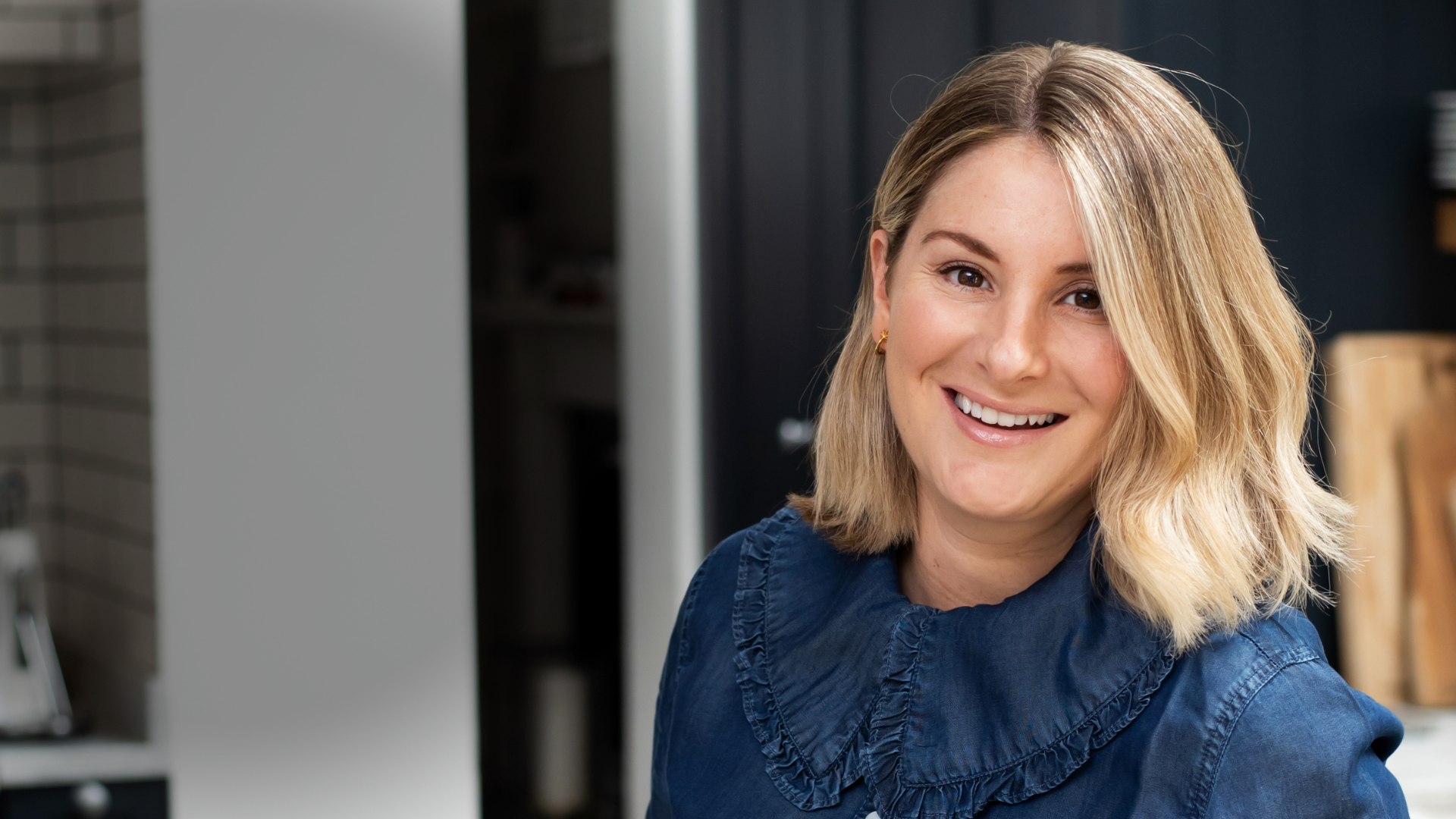
Images Courtesy of Zoe Blaskey
What has building Motherkind demanded of you personally that people wouldn't see from the outside?
Zoe Blaskey: Enormous vulnerability. Every episode, every piece of content, every word in this book is me sharing my own mess and struggle as much as my expertise. I've talked about miscarriages, about raging at a dog I couldn't find, about my inner critic telling me I wasn't good enough to write a book while I was writing it. That level of honesty has been the hardest thing. And the most necessary. You can't ask mothers to drop their masks if you're not willing to drop yours first.
What did you have to let go of to grow?
Zoe Blaskey: Perfectionism, fundamentally. The breastfeeding story in the book is the best example, I was willing to bleed through every feed rather than admit it wasn't working, because admitting it felt like failure. Letting go of perfectionism meant accepting that I could try, get it wrong, repair, and try again. And that 'good enough' is not only sufficient it's actually better for my children than a stressed-out perfect mother would ever be.
What does success look like for you now?
Zoe Blaskey: Continuing to grow the impact of Motherkind, with low stress and lots of time with my girls.
ON DAILY LIFE
What's a tiny habit that makes a disproportionate difference in your day?
Zoe Blaskey: A big glass of water before my morning tea. I committed to it for thirty days to see if it made a difference. It did. The smallest habits are often the ones that teach you that you can keep a promise to yourself. And that self-trust compounds.
What are your non-negotiables in a tough week?
Zoe Blaskey: My fortnightly breathwork class and getting outside for a walk along the beach where I live. Telling at least one person how I actually feel, not just saying I'm fine. And asking myself: "What do I need?"
LOOKING AHEAD
What do you feel you're building with Motherkind now?
Zoe Blaskey: A movement. Not just a podcast or a book, but a shift in how we collectively understand motherhood from something you're supposed to silently endure and bounce back from, to something you're supported through, celebrated for, and allowed to grow within. I want matrescence to be mainstream. I want every mother to know that word before she gives birth. That's the mission.
What do you hope changes for mothers culturally?
Zoe Blaskey: I want the invisible work of motherhood to be seen, named and valued. I want matrescence to be taught antenatally. I want employers to understand what returning from maternity leave actually requires. I want the 'bounce back' narrative to die. And most of all, I want mothers to stop being the last person on their own priority list not because they're told to put themselves first, but because society structures itself to actually support that.
What legacy do you hope to create?
Zoe Blaskey: I hope my girls grow up knowing that their needs matter. That their worth is a given not something they have to earn through productivity or perfection or putting themselves last. I hope they never abandon themselves. That's the cycle I'm trying to break. And through Motherkind, I hope I'm part of a generation of mothers who refuse to let the women following behind us go through this without the tools, the language, and the knowledge that there is nothing wrong with them.
What message would you like to leave with the Luminary Mothers community?
Zoe Blaskey: You are incredible. You are doing the most valued and yet undervalued role in the world.
Follow Zoe on Instagram here. Visit Her Website Here.