
Perelel Co-Founder Alex Taylor on Motherhood, Women’s Health and Caring for Mothers Beyond Birth.
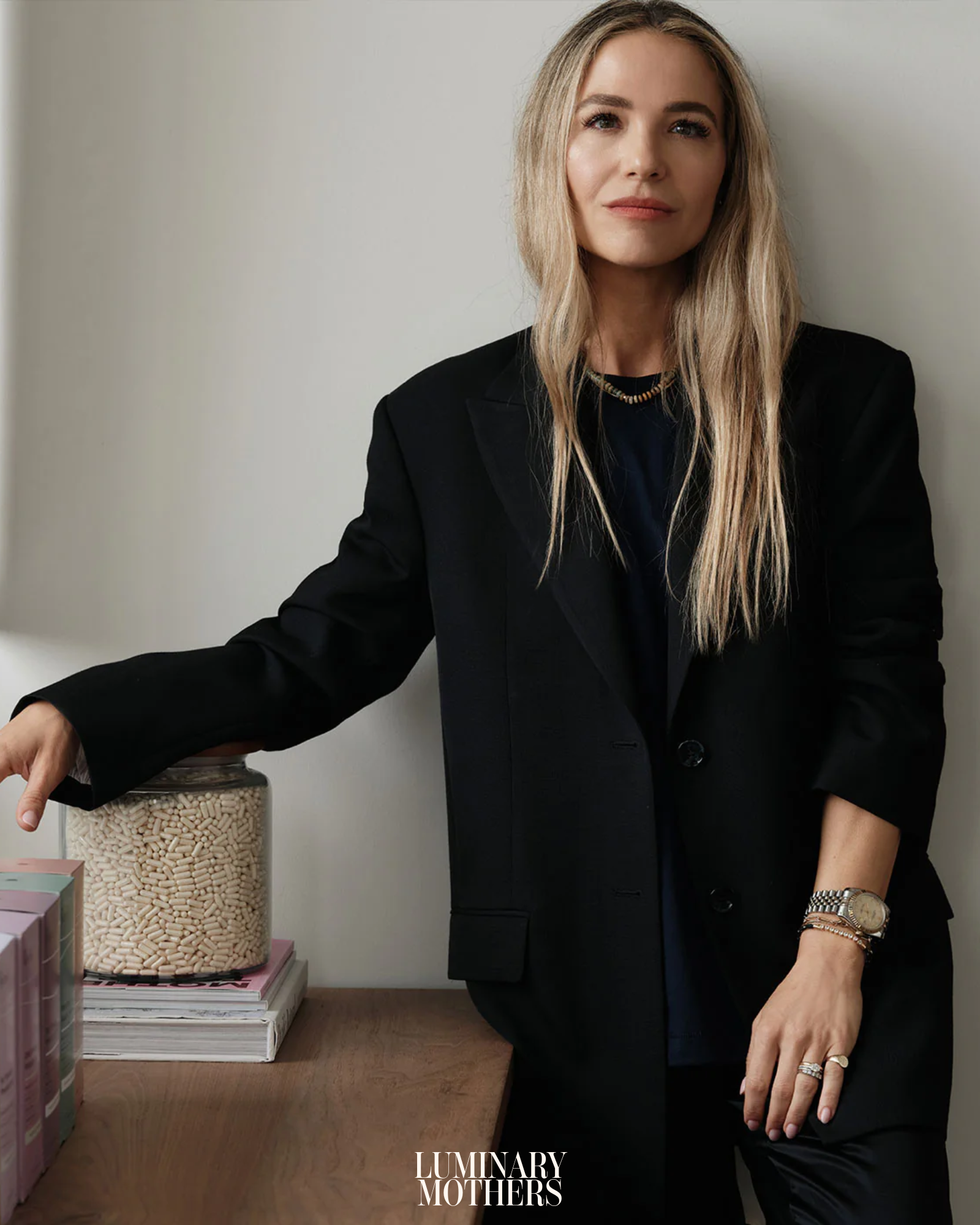
Image Credit: Bliss Kaufman for Oak Essentials
Alex Taylor has always understood the power of building something women can trust. Before co-founding Perelel, the women’s health brand reimagining prenatal, postnatal and stage-specific nutritional support, she honed her eye for culture, storytelling and brand at places like Vogue and L’Oréal, working across the worlds of fashion, beauty and media before turning her focus to one of the most under-supported areas of all: women’s health.
Perelel began, as many meaningful ideas do, with a personal reckoning. Alex’s own health, fertility, pregnancy and postpartum journey left her asking why something as fundamental as caring for women’s bodies felt so fragmented, confusing and lonely. She found herself piecing together information, products and advice at a time when what she needed most was clarity. The experience did not just inspire a business idea; it gave her a mission.
Motherhood, she says, stripped away the noise. It made her more patient, more empathetic, and at the same time far less willing to spend energy on what does not matter. Professionally, it sharpened her ambition. Personally, it reshaped her sense of self. Rather than returning to the woman she was before children, Alex describes learning to recognise and eventually love the person she was becoming: mother, founder, partner and advocate.
That advocacy has now reached beyond Perelel’s products. Recently, Alex has been in Washington, DC, championing women’s health and postpartum care, including the push for postnatal vitamins to become HSA/FSA eligible. It is the kind of change that may sound small on paper, but could make a real difference for women navigating recovery after birth.
For Alex, the bigger vision is clear: a world where mothers are not left to figure it out alone. A world where care continues after birth. A world with more healthy, supported women.
In this Luminary Mothers conversation, Alex opens up about postpartum identity, guilt, ambition, style, leadership, and what it means to build with both courage and care.
By Alice Codford
ON MOTHERHOOD
Alice: Do you feel that motherhood has changed you? In what ways, personally and professionally?
Alex Taylor: Completely. Motherhood stripped away a lot of noise for me. Before kids, I thought I understood responsibility. After kids, the stakes felt different. There’s a clarity that comes with knowing someone is watching how you live, not just what you say. Personally, it made me softer and yet also tougher at the same time. Softer in the way I move through the world—more patient, more empathetic. Tougher in the sense that I waste less time on things that don’t matter. Professionally, it made me more decisive. When your time is limited, you get very clear on priorities. You stop chasing perfection and start chasing impact.
Is motherhood what you expected? What’s been the most unexpected part?
Alex Taylor: Some parts were exactly what I expected—the exhaustion, the love, the chaos. But what surprised me most was how much motherhood reshaped my identity. I expected to become a mother. I didn’t expect to rediscover myself through it. The most unexpected part has been how much it deepened my sense of purpose. Not just in raising my children, but in the work I do. Once you become responsible for someone else’s future, you start thinking differently about the world you’re helping build.
“But what surprised me most was how much motherhood reshaped my identity. I expected to become a mother. I didn’t expect to rediscover myself through it.”
What’s been one of the hardest seasons of motherhood for you, and what helped you get through it?
Alex Taylor: Postpartum was one of the hardest seasons for me—physically, emotionally, and mentally. I had walked into motherhood thinking I was prepared. I read all the books. Got advice from more seasoned moms... but, I wasn’t prepared for how invisible postpartum care can feel. There were moments where I felt depleted in ways I couldn’t easily explain. That stretch of time forced me to ask for help, which has never come naturally to me. But what got me through it was support from my family, my doctors, and a small circle of people who reminded me that recovery takes time and it’s okay to accept help. And honestly, it also gave me the clarity that led to Perelel. Looking back, it’s interesting that I can see how it wasn’t just hard, but also so formative.
What’s been one of the highest points of motherhood so far? Any moments that really stay with you?
Alex Taylor: The ones that stay with me are the moments when my kids show kindness without being prompted. Or when they comfort a friend, or say something thoughtful that makes me realize they’re truly taking in what we’re trying to teach them. Those are the moments that feel like proof that the effort matters.

Image Courtesy of Alex Taylor/Perelel
On a tough day of juggling leadership, parenting and life, what helps you reset after the chaos?
Alex Taylor: Movement helps me reset. I love hiking, strength training, pilates, or anything that gets me out of my head and back into my body. And honestly, time outside with my kids. Watching them play has a way of shrinking whatever felt overwhelming five minutes earlier. It reminds me what actually matters.
Was there a moment in motherhood where you didn’t recognise yourself, and what helped you feel like you again?
Alex Taylor: The first time I looked at myself in the mirror after becoming a mother is something I’ll never forget. I remember seeing myself through a completely new lens and feeling disconnected from the person staring back at me. Physically, emotionally, hormonally... everything had shifted at once. It felt like a gravitational change that no one could have prepared me for. Truthfully, I never returned to the “old me.” And I’ll be the first to admit there was a period where I mourned that loss. There’s an uncomfortable grief that can come with realizing a version of yourself is gone. But over time, I began to understand that this new version of me wasn’t a replacement. It was an evolution. One that continues to unfold each day as a mother, a partner, a friend, a daughter, a founder, and an advocate.
I’ve slowly reclaimed pieces of myself along the way. Not by going backward, but by learning to recognize (and eventually love) the person I was becoming.
“The first time I looked at myself in the mirror after becoming a mother is something I’ll never forget. I remember seeing myself through a completely new lens and feeling disconnected from the person staring back at me. Physically, emotionally, hormonally.”
What has motherhood taught you about leadership and ambition, the way you communicate, make decisions, or set boundaries?
Alex Taylor: It taught me that boundaries aren’t selfish—they’re necessary. I’m clearer now about what I will and won’t take on. Not because I care less, but because I care more about the right things. Fewer, better. It also changed how I communicate. Kids respond to clarity. That lesson carries into leadership. The best communication is simple, honest, and direct. My ambition didn’t disappear when I became a mother, if anything it sharpened.
What do you wish you’d known before becoming a mother?
Alex Taylor: How little support exists for women after birth. We talk a lot about pregnancy. We prepare endlessly for delivery. And then postpartum arrives, and poof—most of us are left to figure it out on our own. I wish I had known to not only ask for help, but also genuinely accept it earlier.
ON THE BIRTH OF PERELEL
Tell us the story of how Perelel began. What was happening in your life when the idea became unavoidable?
Alex Taylor: I was diagnosed with a stress-induced autoimmune disease in my twenties, which would later shape my fertility and pregnancy journey in ways I didn’t fully understand at the time. That diagnosis was really the beginning of me seeing my body differently. It made me realize just how complex women’s health is—and how oversimplified and underserved it often feels in practice, especially when it comes to the products available to support us.
When I eventually moved through fertility, pregnancy, and postpartum, that realization became personal in a new way. I found myself piecing together a vitamin regimen from multiple sources, sorting pills from different bottles each morning, trying to make sense of what my body actually needed. It was frustrating, time-consuming, and surprisingly isolating. I kept thinking—why does this feel so hard to figure out?
Around that same time, my co-founder, Tori, was having her own experience. Her daughter was born with a cleft lip, which led her deep into the research. She learned how critical the timing of certain nutrients can be during pregnancy, and how little transparency exists around that timing. When we started comparing notes, it became clear that what we were both experiencing wasn’t random—it was systemic.
The idea for Perelel became unavoidable when we stepped back and saw the bigger picture. The same principles we were uncovering applied to every hormonal shift in a woman’s life, yet there were no products designed to support those transitions with targeted, stage-specific nutrition. Women were left to figure it out on their own, just like we had.
We founded Perelel because we believed women deserved better—better products, clearer guidance, and support that actually reflects the complexity of their bodies. What started as personal frustration quickly became a much larger mission: to meet women where they are, with science-backed support that evolves alongside them.
“We talk a lot about pregnancy. We prepare endlessly for delivery. And then postpartum arrives, and poof—most of us are left to figure it out on our own.”
Was there a moment you thought: “Prenatal and postpartum deserve better than what’s out there”?
Alex Taylor: It honestly wasn’t just one moment—it was every step of the journey that reinforced how much better support was needed.
When I was trying to get pregnant, I remember feeling overwhelmed by the lack of credible, straightforward guidance. I didn’t know what to take, what actually mattered nutritionally, or how to properly support my body during that phase. There were so many opinions, but very little clarity.
Then once I was pregnant, that feeling didn’t go away—it intensified. I found myself piecing together information from different sources, trying to understand how to support my body nutritionally, even figuring out basic things like which workouts were safe and appropriate as my body changed. It felt like I was constantly trying to connect dots that should have already been connected.
And then postpartum made the gaps impossible to ignore. You have this baby, and understandably the focus shifts to them—but suddenly you’re left to your own devices at a time when your body is recovering from one of the biggest physical events of your life. When we launched Perelel, there weren’t even postnatals widely available on the market, which still shocks me when I think about it.
So while postpartum was the most glaring example, the truth is that every stage—from trying to conceive through pregnancy and beyond—made it increasingly clear that women deserved more thoughtful, credible support than what existed at the time.

Image Credit: Bliss Kaufman for Oak Essentials
Perelel is known for stage-specific support. Why did that matter enough to build the whole company around it?
Alex Taylor: Because once we really looked at the landscape, it became clear that women’s health had been reduced to binaries for far too long. You were either pregnant or not. Fertile or not. Postpartum or “back to normal.” But that’s not how women’s bodies actually work.
There are distinct hormonal chapters across a woman’s life, and each one comes with different nutritional needs and different goals. Trying to conceive is not the same as pregnancy. Pregnancy is not the same as postpartum. And postpartum certainly isn’t the end of the story. Yet most supplements treated all of those stages as interchangeable, like one formula could somehow meet every need.
That disconnect was hard to ignore. We saw women—ourselves included—trying to optimize their health for very specific outcomes, like fertility or recovery after birth, but without tools designed to support those shifts. It felt like the category had oversimplified something that is inherently complex.
So stage-specific nutrition wasn’t just an interesting idea to us—it felt essential. If our bodies are constantly changing, our support should change with them. Once we saw that clearly, it didn’t feel optional to build the company around it. It felt like the only way to do it responsibly.
When you started, what felt like the biggest gap? The product, the education, the support, or the standard of care?
Alex Taylor: Honestly, it was all of it. And the gaps were so interconnected. There were obvious gaps in products, yes, but what sat underneath that was a much larger issue: how little we actually know about women’s health. That realization is what made the women’s health research gap feel so inextricably tied to the brand from the very beginning. When the underlying research is limited, the products, the guidance, and the standard of care all reflect that.
There was also a huge lack of education. Most women weren’t given clear, credible guidance on how to take care of themselves depending on where they were in their journey—whether they were trying to conceive, pregnant, or recovering postpartum. We found ourselves doing a tremendous amount of education early on, helping women understand why targeted support matters and how their needs shift across different hormonal stages.
That’s why leaning on our founding team of physicians and researchers was so important. We wanted the education to be grounded in clinical insight, not trends or guesswork.
Ultimately, though, what we were really working toward was elevating the overall standard of care for women across the entire continuum. Not just creating a better product, but helping shift expectations around what women should be able to access, understand, and expect when it comes to their health.
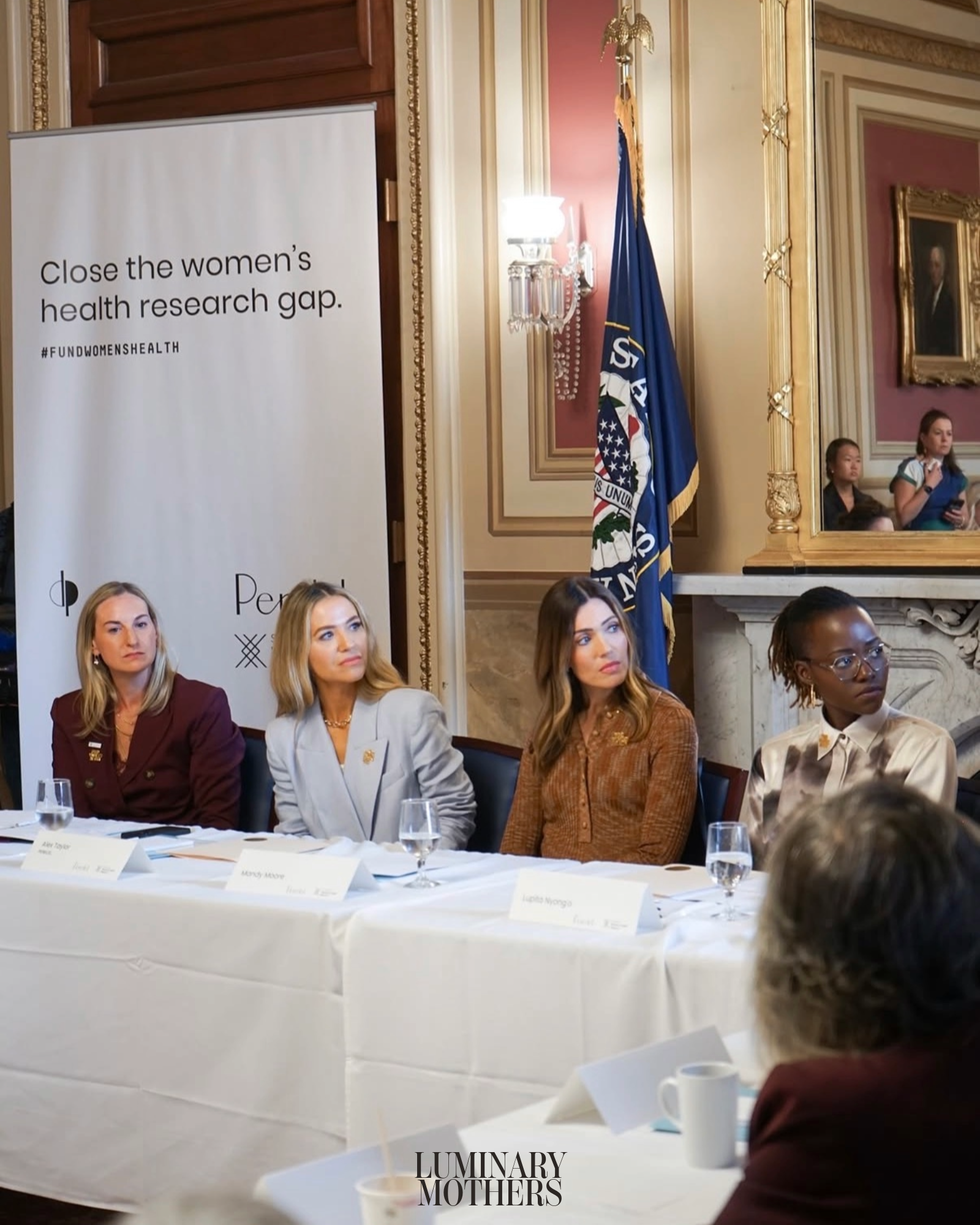
Image Courtesy of Alex Taylor/Perelel
This is an intimate category. How did you think about building trust from day one?
Alex Taylor: Trust was really the starting point for us, because so much of what inspired Perelel was the lack of trust we felt in the vitamin category itself.
When we began looking closely at what was available, it became clear that many supplements weren’t created with enough clinical rigor or transparency. That didn’t sit right with us, especially given how high the stakes are when women are trying to conceive, pregnant, or recovering postpartum. We knew that if we were going to build something meaningful in this space, trust had to be the foundation.
That’s why one of the earliest decisions we made was to build the company alongside physicians and researchers who were actually working with women day in and day out. Not as advisors brought in later, but as true founding partners. We wanted the people who understood women’s bodies best to be at the center of how the products were created.
And beyond the science, trust also came from our genuine lived experiences. My co-founders and I had all gone through very different health journeys, but we shared the same frustrations. That shaped how we thought about every decision—not just what we made, but how we showed up as a brand. The tone, the education, the way we speak to women—it all comes back to one question: how would we want to be supported if we were in her shoes?
So from day one, everything we’ve built has been about reinforcing that trust, over and over again.
“We founded Perelel because we believed women deserved better—better products, clearer guidance, and support that actually reflects the complexity of their bodies.”
What’s a customer message or story that made you think, “This is bigger than supplements”?
Alex Taylor: It’s hard to choose just one, because there have been so many moments that made us realize this work goes far beyond supplements.
We’ve had women email us in the middle of the night to tell us they’re pregnant and that we were among the first to know. We’ve heard from husbands and partners thanking us for creating space and support for families navigating pregnancy loss—messages that are incredibly moving to receive and never taken lightly.
But one moment that has always stayed with me was a customer who saved every single sachet from her journey—from trying to conceive all the way through postpartum. She mailed them to us in a box, organized in sequential order, marking each stage she had gone through.
Seeing that was a powerful moment because it was such a tangible reminder that what we created wasn’t just a product sitting on a shelf—it was something that had been with her, day by day, through one of the most important seasons of her life. It made clear to me that this was about far more than vitamins. It was about support, consistency, and helping women feel less alone in moments that can feel overwhelming or uncertain.
LIFE AS A MOTHER & FOUNDER
What does juggling a growing business and family life actually look like for you day to day?
Alex Taylor: Day to day, it looks structured—but never perfectly balanced. My mornings usually start early with my kids. Getting them ready, doing school drop-off—that time feels grounding for me, even on the busiest days. From there, my day shifts quickly into work mode: team meetings, decision-making, creative reviews, problem-solving. Running a growing business means there’s always more to do than time allows, so I’ve learned to be very intentional about how I spend my hours.
What makes it work, most days, is being clear about priorities. I try to stay present in whatever role I’m in at the moment—whether that’s leading a meeting or sitting on the floor helping with homework. I don’t always get it right, but I’ve learned that trying to do everything at once usually means not doing anything well.
Evenings are a reset point. Dinner, bedtime routines, those quieter moments with my kids—they bring me back to what matters most. Some days feel seamless, others feel chaotic, but the reality is that juggling both is less about perfect balance and more about constant adjustment.
“Something that really shifted my thinking was hearing Dr. Becky talk about guilt as something we often manufacture in our own minds. That idea stuck with me—that sometimes we assign guilt to ourselves even when we haven’t done anything wrong.”
Do you ever feel guilt, and if so, what helps you move away from that thought?
Alex Taylor: Yes, of course. Guilt is something I think most mothers wrestle with, and I’m no exception. There are moments when I feel pulled in two directions—wanting to be fully present with my children while also feeling deeply committed to the work I’m building. Even when I know I’m doing meaningful work, the feeling can still creep in.
Something that really shifted my thinking was hearing Dr. Becky talk about guilt as something we often manufacture in our own minds. That idea stuck with me—that sometimes we assign guilt to ourselves even when we haven’t done anything wrong. When I catch myself in that spiral, I try to pause and remind myself: I’m not doing something wrong by pursuing work I care about. I’m showing my children what it looks like to build something, to stay curious, and to commit to something meaningful.
What also helps is reframing the narrative. Instead of thinking about what I’m missing, I try to focus on the example I’m setting. I want my children to see that it’s possible to care deeply about your family and your ambitions at the same time. That doesn’t eliminate guilt completely, but it gives it less power.

Image Courtesy of Alex Taylor/Perelel
What boundaries have you had to set to make the balance sustainable?
Alex Taylor: These boundaries didn’t exist overnight—they evolved over time. In the early days, I was in full startup mode with a newborn and a toddler, wearing more hats than I can count. Boundaries felt blurry because everything felt urgent.
As the business matured, my boundaries had to mature with it. One of the most important ones I set early on was protecting a window of time in the evening—those couple of hours around dinner and bath time are sacred in our house. I’m not available for calls. I’m not multitasking. I’m fully with my kids. That consistency has made a huge difference.
I’ve also had to set boundaries around taking care of myself, which didn’t come naturally at first. Scheduling workouts, making time with my partner, protecting focused work time—those aren’t luxuries, they’re necessities. When those things slip, I feel it almost immediately.
What I’ve learned is that boundaries aren’t about rigidity—they’re about sustainability. When they’re blurry, everything feels harder. When they’re clear, I’m calmer, more present, and better in every role I’m trying to play.

Image Courtesy of Alex Taylor/Perelel
What’s something you’ve had to let go of in order to grow the business, and how did that feel?
Alex Taylor: Truthfully, in the early days, when a business is just starting, you’re involved in every detail. You’re building, solving, fixing, learning as you go. And there’s a certain comfort in that level of control, even if it’s exhausting. But as the business grows, holding onto everything stops being helpful and instead it just slows progress.
Letting go of that control wasn’t easy. There were moments where it felt uncomfortable to step back and trust others to take ownership of things I had once handled myself. But it was necessary. Growth requires trust. It requires trust in your team, trust in the systems you build and the foundation you laid, and trust that things can be done well without you touching every single piece.
I’ve also had to let go of the idea of perfection. Not everything will be flawless, and not every decision will be right the first time. Learning to move forward without over-polishing everything has been a big shift for me. My co-founder often reminds me of the importance of “good enough.”
None of this has felt “natural” at first... but over time it’s been incredibly freeing. And it’s made both the business and my life more sustainable.
What does success look like to you now, in this season of life?
Alex Taylor: Success looks very different to me now than it did earlier in my life. These days, it’s less about milestones and more about the depth and richness of my relationships.
It’s about being present with my children and truly knowing them as individuals. It’s about staying connected to my partner, nurturing friendships that have stood the test of time, and building meaningful relationships with the people I work alongside every day.
ON BEAUTY, STYLE & SELF-CARE
Has your personal style changed since becoming a mother?
Alex Taylor: I love this question. I’ll never forget the first time I looked at myself in the mirror after becoming a mom. I remember thinking, who am I now? Not just physically, but in how I showed up in the world. And then I remember the first time I got dressed to leave the house as a new mom and wondering, what does a mom even wear? What is my version of mom style?
For the first few years after having my son, I felt a little lost with it. Before kids, I had a very clear sense of my personal style. But my body had changed, my routines had shifted, and I didn’t quite know how to dress this new version of myself or feel fully comfortable in it.
Over time, though, I found my way back to what felt right. Today my style feels more confident and relaxed than it ever did before—cool, simple, a little masculine, and a tad undone. It feels very much like me.
What’s changed most is the clarity I have: I know instantly if something is “me” or not. There’s something powerful about knowing what you like, what feels good on your body, and showing up in that with confidence in front of your kids. It’s never been about looking like a “mom.” It’s about feeling like myself. And feeling good.
What’s your go-to outfit formula for feeling put-together quickly?
Alex Taylor: If you asked anyone at my office, they’d tell you I’d be wearing a blue button-up shirt. I’ve always loved sky blue shirts cut with a more masculine fit (maybe it’s because I’m a bit of a blue-sky thinker). There’s something about it that feels clean, not fussy, and easy. I probably have 25 to 30 blue shirts in rotation (a few years ago the team had me count and I was at 23!), everything from solids blues to various stripes.
My formula is pretty simple: a blue button-up with wide-leg trousers or denim, a slingback, and usually a sweater draped over my shoulders because I’m always cold. It’s comfortable, polished, and takes the guesswork out of getting dressed, which I really appreciate on busy mornings.

Image Courtesy of Alex Taylor
What’s your go-to handbag for everyday? (The perfect work and mom bag)
Alex Taylor: I mean, what mom doesn’t love a “big-ass bag”? I’ve fully embraced the “capacious bag” that can hold the world. A few years ago, I invested in The Row Margaux bag, and honestly, it has paid for itself in cost per wear. It fits everything—my laptop, an extra pair of shoes, snacks, all the things I need whether I’m headed into the office or deep in mom mode.
When I am not doing a big bag, I rely on a two-bag system. I’ll often carry a classic L.L. Bean boat tote with a smaller bag tucked inside. It helps me keep some separation between work life and mom life, while still having everything I need within reach.
At this stage of life, practicality matters, but I still want something that feels beautiful and well-made. A great bag that works hard is worth every penny!

Image Courtesy of Alex Taylor
Who or what inspires your style?
Alex Taylor: For me, style inspiration has always been less about trends and more about practicality—what feels good, simple, and timeless.
I’ve never been someone who chases what’s trendy in the moment. I’m drawn to pieces that feel classic and well-made, things you can invest in and wear for years. Quality matters to me, and so does versatility. I want clothes that work hard and still feel effortless.
There are definitely people who have shaped that perspective over time. Early in my career at Vogue, I worked with Tonne Goodman, and I always admired the simplicity of her style. It felt durable and timeless—never overdone, always intentional. That left a real impression on me.
LOOKING AHEAD
What’s next for Perelel? What are you most excited to build or deepen in the next year?
Alex Taylor: Continuing to deepen the support system we’ve been building for women. Over the next year, I’m really excited to continue expanding how we show up for women in more ways.
But beyond products, I’m deeply motivated by the opportunity to continue pushing the broader conversation around women’s health forward. There’s still so much work to be done to close the research gap and elevate the standard of care. If Perelel can play even a small role in helping move that forward—through better products, better education, and stronger advocacy—that’s what makes the work feel meaningful to me.
What’s the bigger change you hope Perelel helps create for mothers?
Alex Taylor: My hope is that Perelel can be a driving force to create a world with more healthy, supported women. That’s truly our mission, and it’s what gets me out of bed every day. For far too long, women—especially mothers—have been expected to navigate some of the most physically and emotionally demanding seasons of their lives with very little structured support. I hope Perelel helps shift that expectation. That caring for mothers becomes the standard, not the exception.
And over time, I hope Perelel becomes a globally recognized brand that women instinctively trust—one that stands for evidence-based, clinically grounded support at every stage of life. A brand women can turn to and feel confident that the guidance is thoughtful, credible, and designed with their real experiences in mind.
But more than anything, I want women to feel held through these transitions, no longer left to “figure it out” on their own. If we can help normalize that level of care and support for mothers, that would be a meaningful shift.

Image Courtesy of Alex Taylor
What legacy do you hope to create, as a leader and as a mother?
Alex Taylor: I hope the legacy I create is one of courage and care—showing that it’s possible to build something meaningful while also showing up fully for the people you love.
As a leader, I hope to leave behind work that made a real difference for women. Not just products, but progress—helping shift the conversation around women’s health so that future generations don’t have to fight as hard to be seen, heard, and properly supported. If the work we’re doing contributes in some way to closing the research gap and improving care for women, that would feel incredibly meaningful.
As a mother, my hope is simpler but just as important. I want my children to grow up seeing what it looks like to care deeply about others, to take responsibility for the world around them, and to have the courage to pursue something that matters. Not perfectly, but with intention.
More than anything, I hope they remember that I showed up—with love, with effort, and with a belief that things can always be made better than we found them.
And finally, what message would you like to leave with the Luminary Mothers community?
Alex Taylor: Don’t underestimate what’s possible. So many of the things that have shaped my life—becoming a mother, building a company, advocating for women’s health—started as ideas that felt overwhelming or uncertain at the time. But possibility often begins in small, quiet ways. It starts with paying attention to what feels broken, what feels missing, or what you wish existed.
Motherhood, in particular, has a way of expanding your sense of what matters. It makes you think not just about your own life, but about the world your children will grow up in. And from that place, incredible things can happen.
You don’t have to have everything figured out. You just have to stay open to the idea that change is possible... and that you might be part of creating it.
Follow Alex Taylor on Instagram here. Follow Perelel Here. Visit Their Website Here.